Schluter®-BARA-RWL
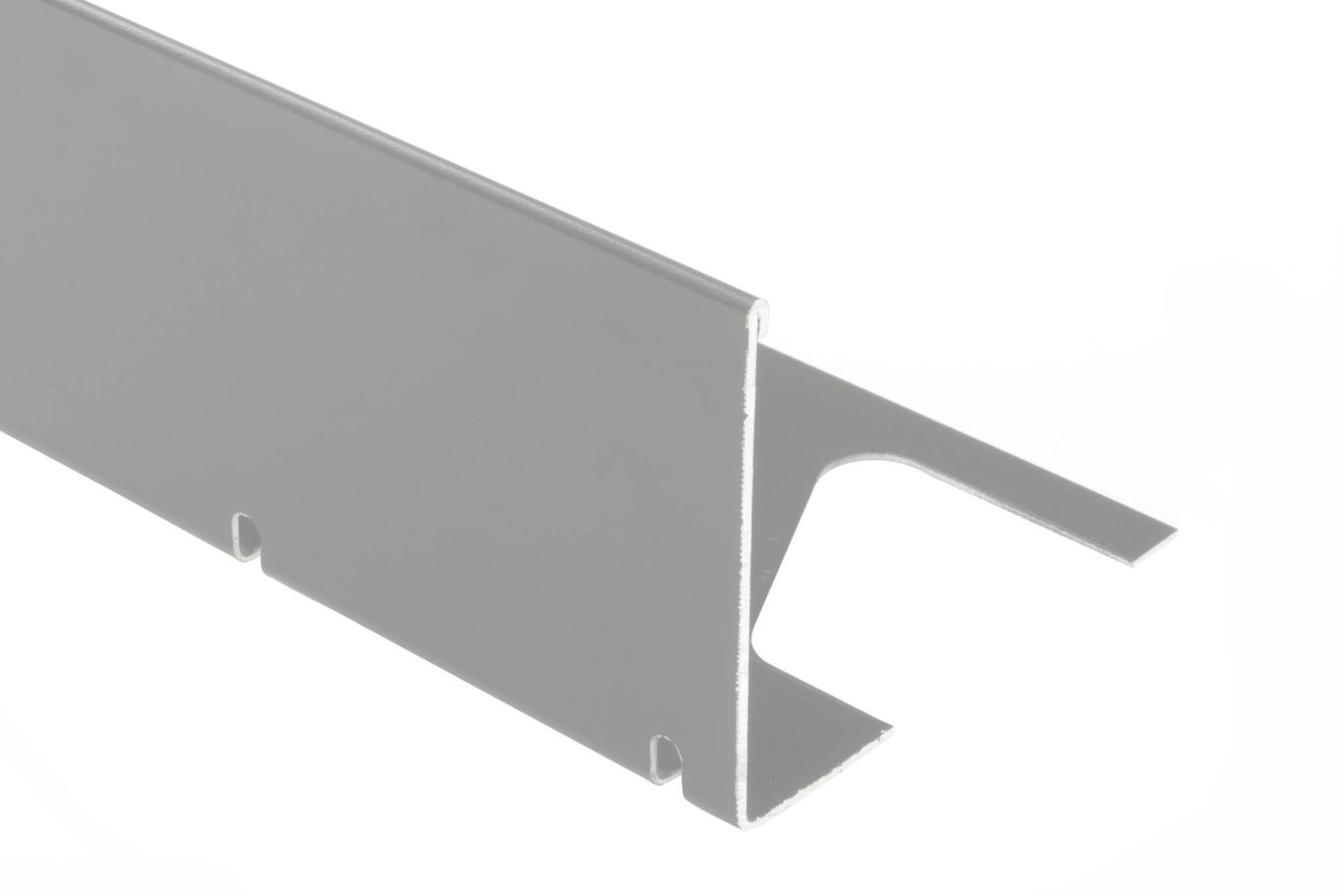
Perfil de canto con agujeros de drenaje para baldosas de gran tamaño

- Está diseñado para el perímetro de balcones y terrazas con revestimiento instalado sobre grava suelta o subestructuras elevadas.
- El perfil posee un ala de fijación con una perforación radial especial para que pueda ser utilizado para formar curvas.
- Disponible en aluminio con revestimiento de color.

Encuentre aquí los accesorios recomendados
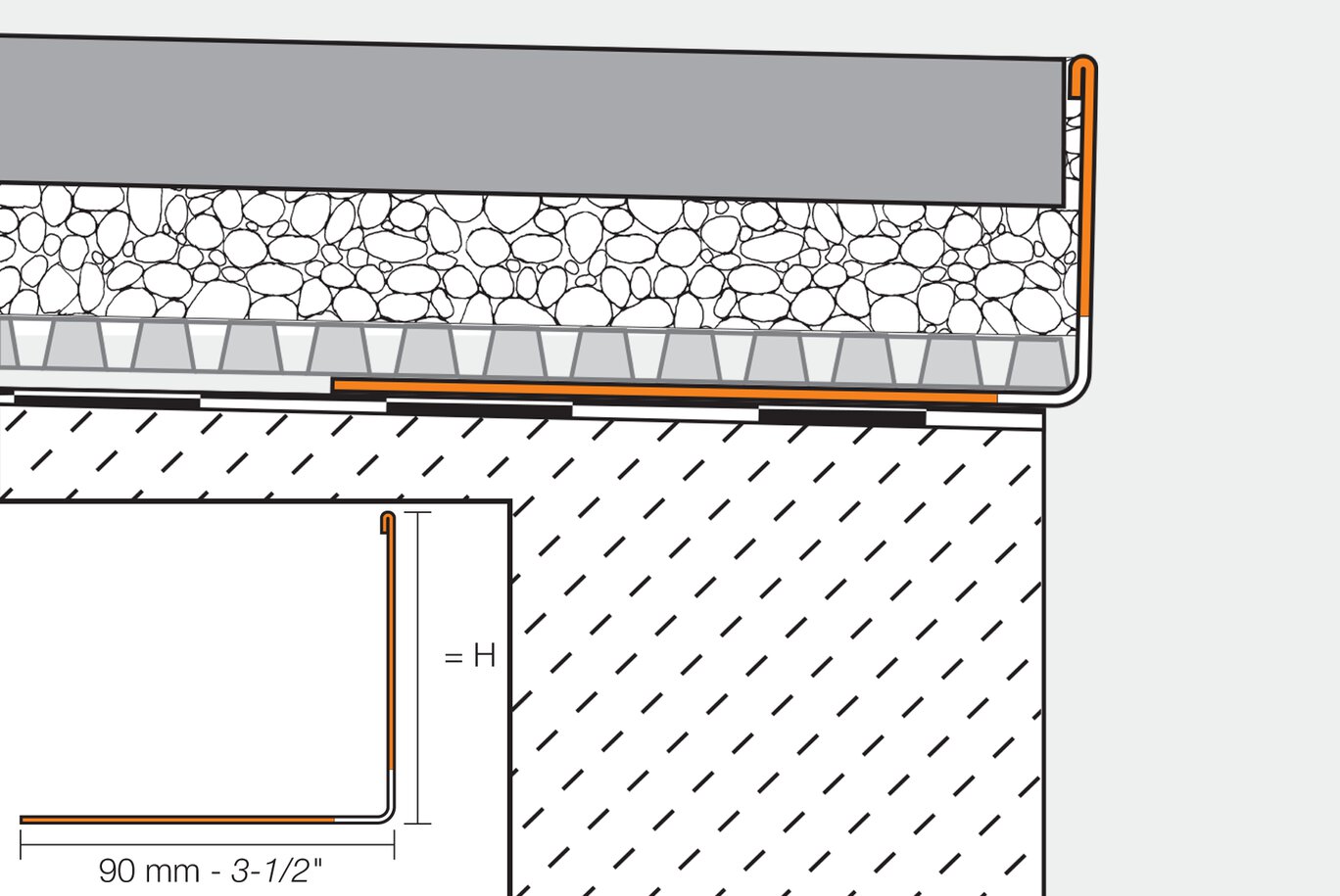
Schluter®-BARA-RWL is a color-coated aluminum, L-shaped finishing profile for large-format pavers that are laid on loose gravel layers or stilted assemblies above a waterproofing layer and drainage layer. The trapezoid-perforated anchoring leg of BARA-RWL is placed along the edge, on top of the waterproofing layer, and adjusted to the proper height and alignment. The vertical finishing leg covers the edge of either the entire surface assembly or just the gravel layer or stilts. Profile heights from 9/16" to 5-29/32" (15 to 150 mm) allow for any type of edge formation. Drainage holes, spaced at approximately 2-15/16" (75 mm), are incorporated at the transition of the anchoring leg and the finishing leg to ensure the proper drainage of any collecting seepage water.
BARA-RWL is available with a special radius perforation “R” so that the profile can be used to form curves.
BARA-RWL requires no special maintenance or care. The coatings on the color-coated aluminum profile are colorfast and UV-resistant. Damaged surfaces shall be painted over.
1. Select BARA-RWL according to the height of the floor construction to be covered. Prefabricated corners and connectors are available for inside and outside corners. Abut the profile ends of BARA-RWL, leaving an approx. 3/16" (5 mm) joint. Cover the joint with the clip-on connector.
2. Before the TROBA-PLUS drainage membrane is installed, set the trapezoid-perforated anchoring leg of the finishing profile, BARA-RWL, onto the waterproofing layer and, if required, adjust to the proper height and alignment with dots of mortar.
3. If BARA-RWL is used as a gravel edge profile, the gravel layer should abut the vertical profile leg just below the upper lip. The concrete pavers are laid loosely on top of the leveled gravel layer.
4. If BARA-RWL is used as a finishing profile in conjunction with stilted floor coverings, the profile covers the exposed edge of the covering assembly. The support pedestals are laid on top of the trapezoid-perforated anchoring leg of BARA-RWL. The concrete pavers are then set onto the pedestals.
Nota: para un drenaje sin obstrucciones en las áreas de borde del revestimiento, asegúrese durante la instalación que los orificios de drenaje de la membrana de drenaje y del perfil y los espacios entre los pedestales queden abiertos.
FAQ
¿Cómo corto los perfiles?
Los perfiles Schluter® están disponibles en diferentes materiales, por lo que los métodos de corte varían. A continuación, se indican las mejores prácticas de corte según...
Leer más