Schluter®-DILEX-KSN
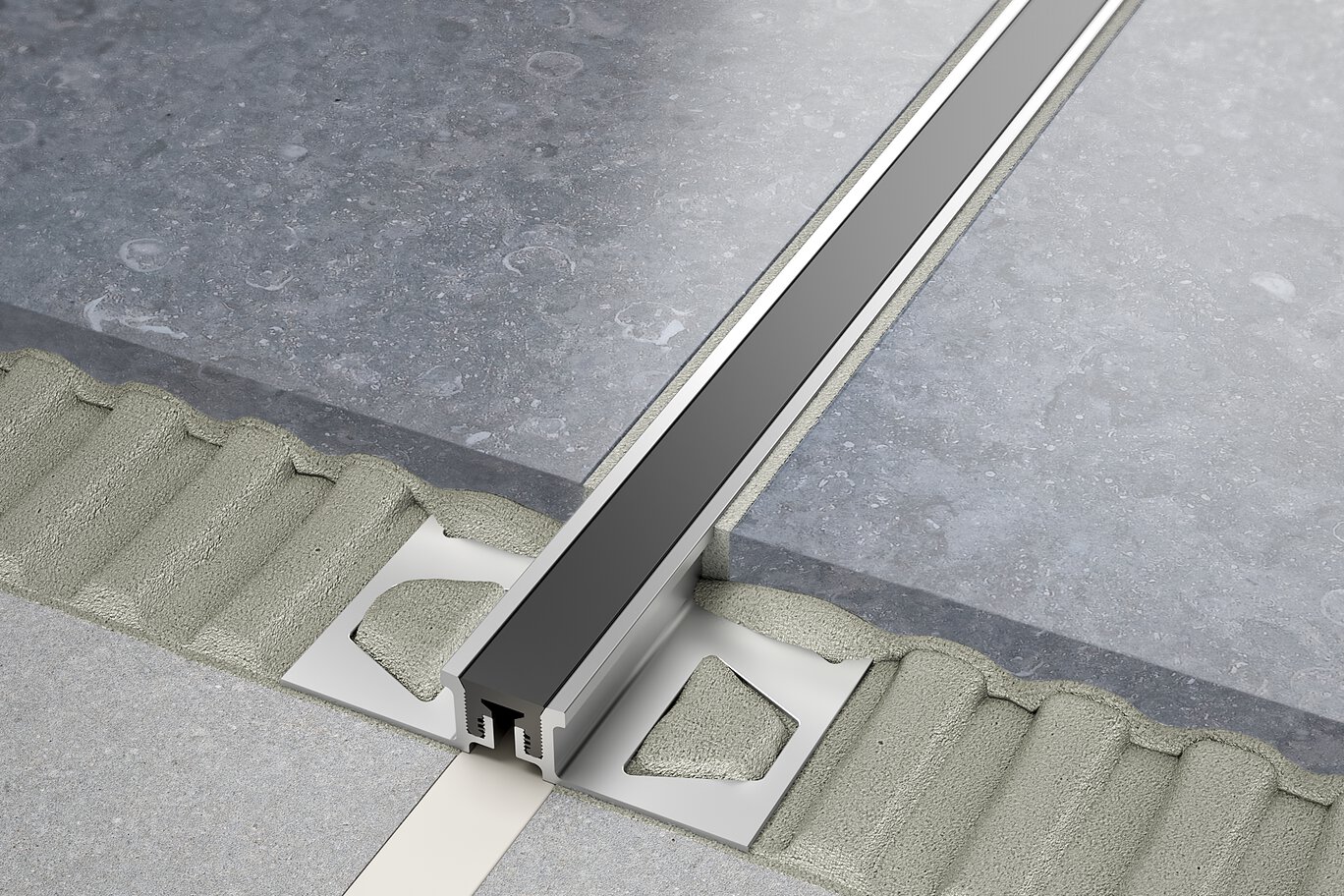
Surface movement joint profile with replaceable rubber insert

- Available in four new colors to simplify the selection of a matching grout
- Designed to allow movement and reduce stress in large, tiled areas
- Eliminates the need for caulking
- Prevents cracking and delamination of tiles
- Maintenance-free
- Offers secure edge protection for surfaces exposed to heavy-duty commercial traffic, such as warehouses, production facilities, and shopping malls
Find recommended accessories here

Profile Estimator
Discover what you need for tile protection and easy transitions.
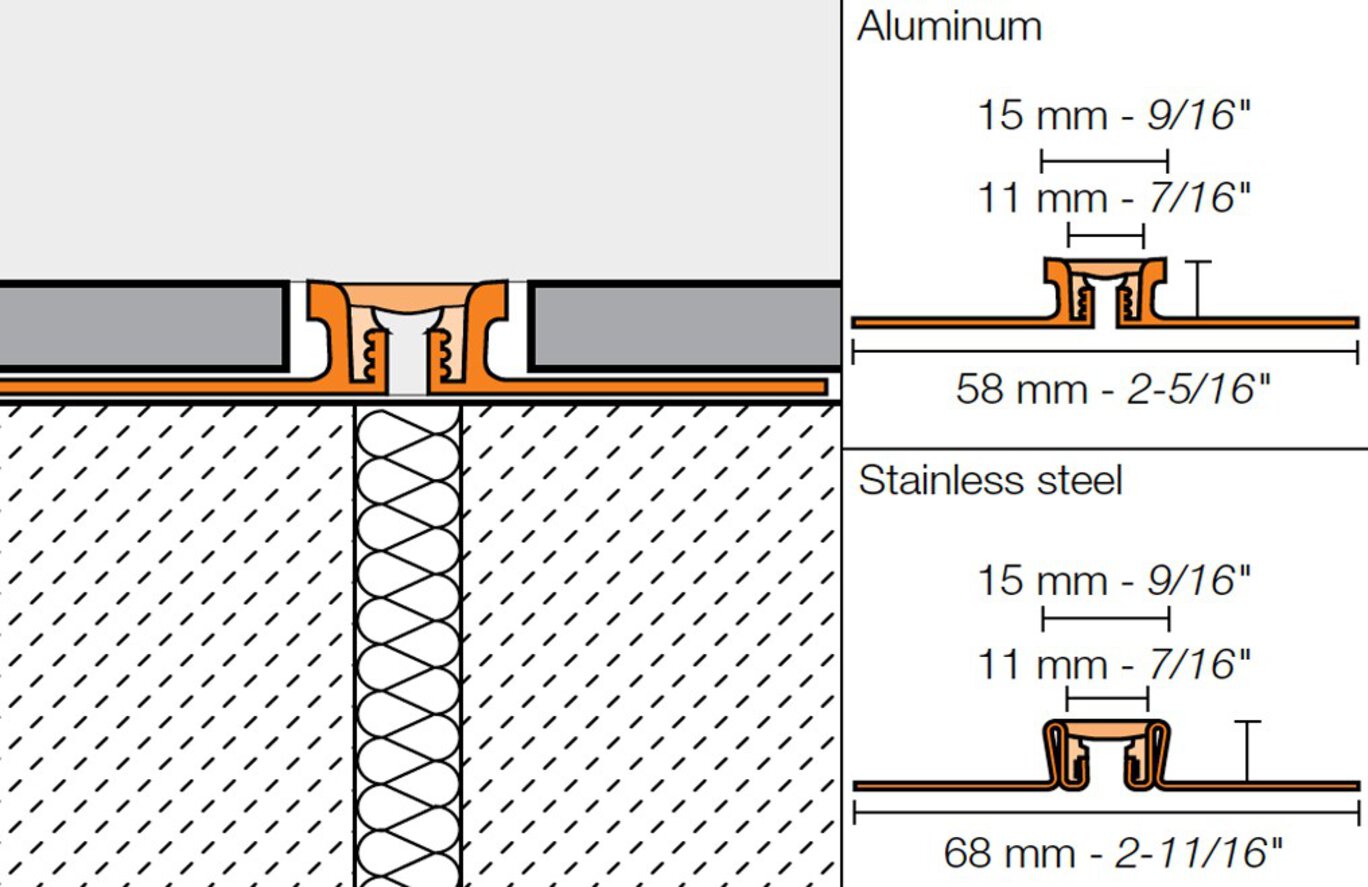
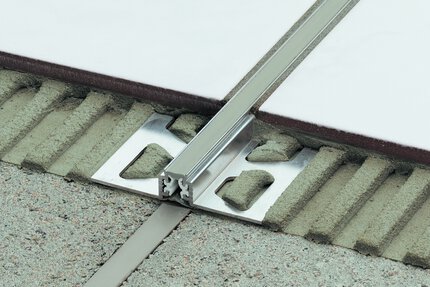
Schluter®-DILEX-KSN features trapezoid-perforated anchoring legs, made of stainless steel or aluminum, which are secured in the mortar bond coat and provide edge protection for adjacent tiles. The profile separates individual fields in the tile covering and accommodates movement via the 7/16" (11 mm)-wide, soft thermoplastic rubber movement zone, which also forms the visible surface. The thermoplastic rubber movement zone can be replaced if damaged.
DILEX-KSN, with stainless steel anchoring legs, offers secure edge protection for surfaces exposed to heavy-duty commercial traffic (e.g., warehouses, production facilities, or shopping malls).
Le profilé DILEX-KSN ne requiert aucun soin ou entretien particulier et est résistant aux moisissures et aux champignons. Nettoyez le profilé au moyen d'un agent de nettoyage domestique courant. Les surfaces en acier inoxydable exposées aux conditions ambiantes ou à des substances chimiques fortes doivent être nettoyées périodiquement avec un nettoyant domestique doux. Un nettoyage régulier permettra de conserver la belle apparence de l’inox et réduira les risques de corrosion. Les produits de nettoyage utilisés ne doivent en aucun cas contenir d'acide chlorhydrique ou fluorhydrique. Les surfaces d’acier inoxydable deviennent plus lustrées lorsqu’on les nettoie au moyen d’un produit de polissage pour chrome.
Oxidation films on aluminum can be removed by using a conventional polishing agent, but will form again.
The thermoplastic rubber inserts in DILEX-KSN are replaceable.
1. Select the profile according to the tile thickness and format.
2. Using a notched trowel, apply thin-set mortar over the area where the profile is to be placed. The profile must align directly with movement joints in the substrate below.
3. Press the perforated anchoring legs of the profile into the mortar and align.
4. Trowel additional thin-set mortar over the perforated anchoring legs to ensure full coverage and support of the tile edges.
5. Solidly embed the tiles so that the tiled surface is flush with the top of the profile; the profile should not be higher than the tiled surface, but rather up to approx. 1/32" (1 mm) lower.
6. A joint of approximately 1/16" - 1/8" (1.5 - 3 mm) should be left between the tile and the profile.
7. Fill the joint completely with grout or setting material.
FAQ
How do I cut profiles?
Schluter™ profiles are available in a variety of different materials , so methods for cutting vary. Below are best practices for cutting according...
Read moreCAD drawings
Specify our products using the


Watch & Learn
About the product

Introduction to Schluter® Profiles

Tips on How to Choose Your Profile Size in Relation to Your Tile

Tips on Cutting Profiles
Find some existing tutorials and project documentation videos to learn how-to get the best out of our products - for more fun in your life, start now!
Watch more videos / playlists


Perfiles de junta de movimiento / Juntas de superficie y de dilatación
Schluter®-DILEX-AKWS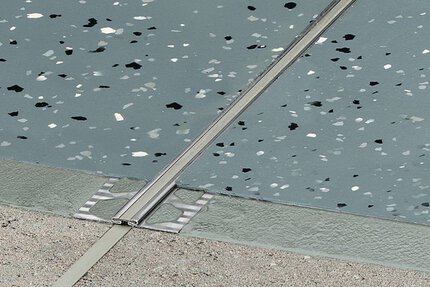
Perfiles de junta de movimiento / Juntas de superficie y de dilatación
Schluter®-DILEX-EKSB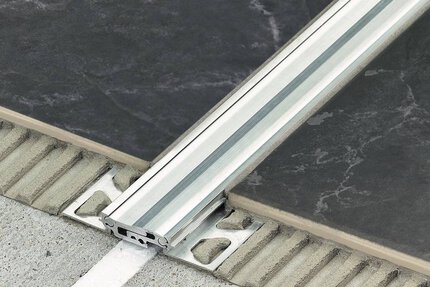
Perfiles de junta de movimiento / Juntas de superficie y de dilatación
Schluter®-DILEX-BT