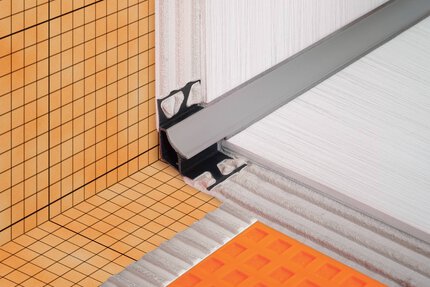
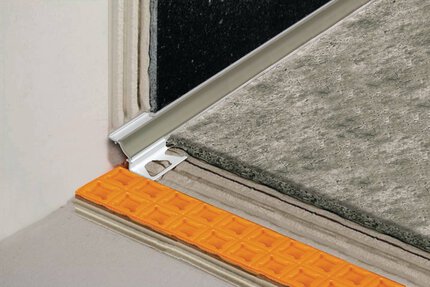
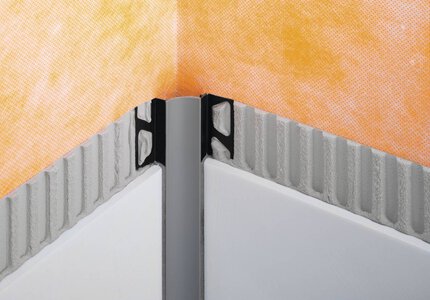
Schluter®-DILEX-EHK
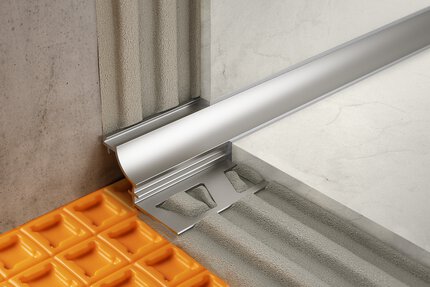
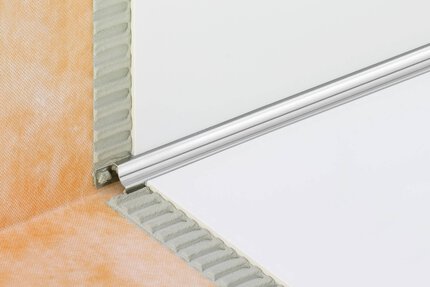
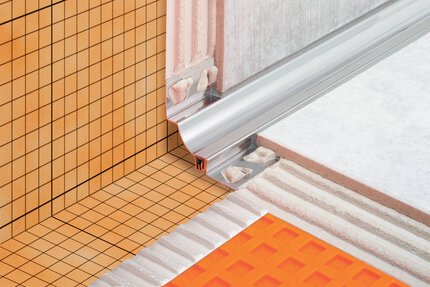
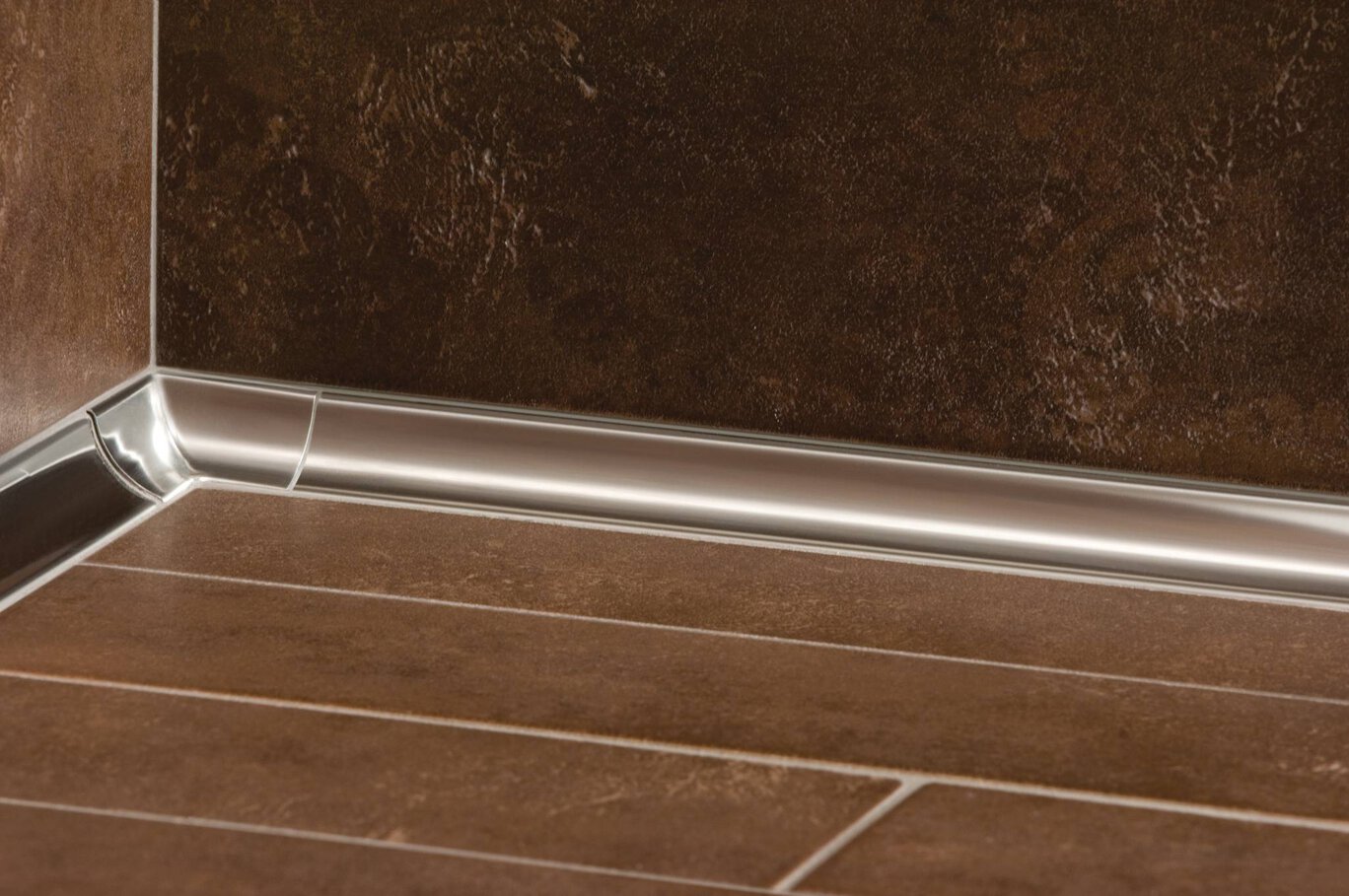
Cove-shaped profile for inside wall corners and floor/wall transitions

- Eliminates the need for caulking
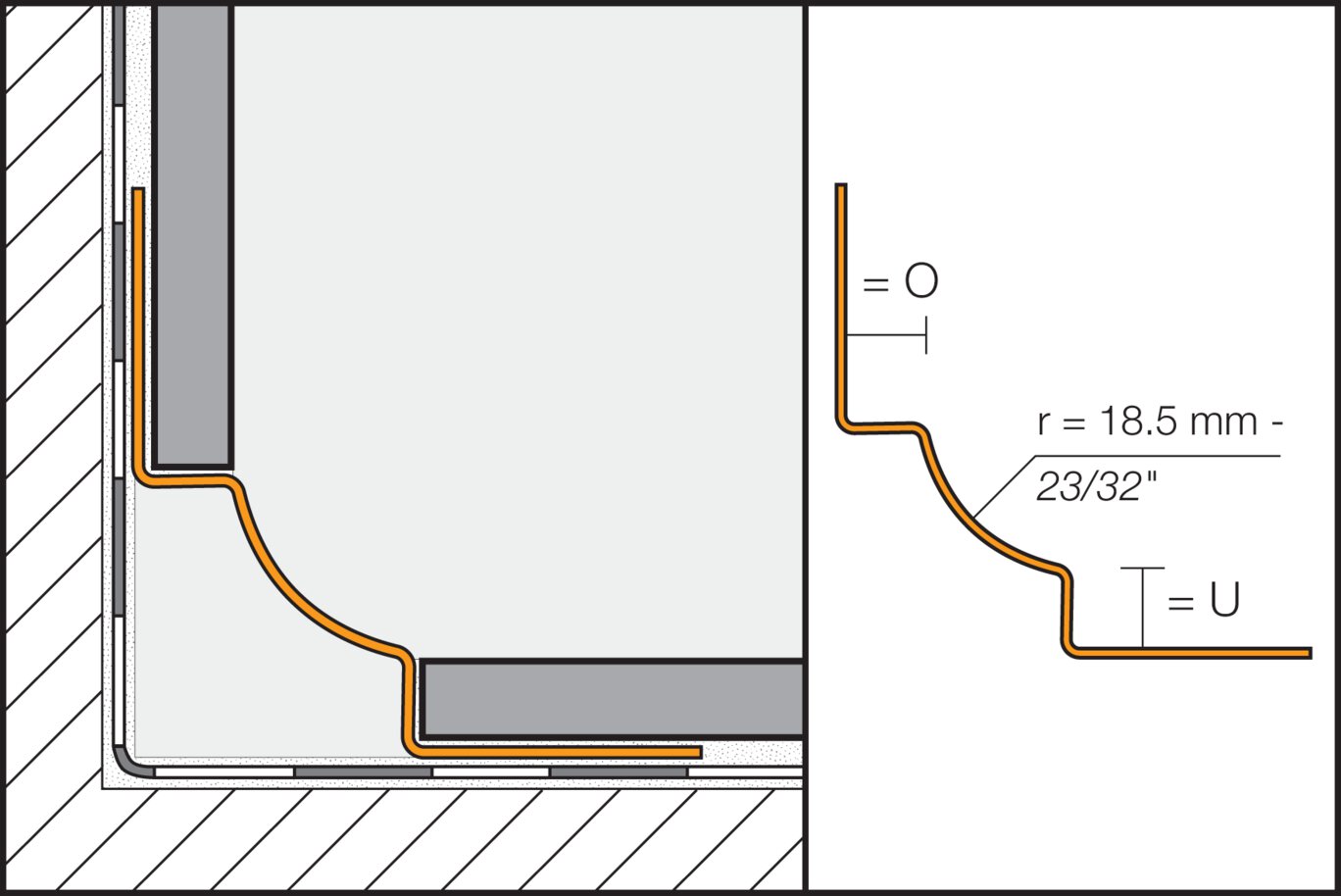
- Features a 23/32"(18.5 mm)-wide radius to prevent water penetration and dirt accumulation, making cleaning simple
- Ideal for tiled environments with high sanitary requirements, such as commercial kitchens, bathrooms, and food processing plants
- Designed for applications where limited movement in expected
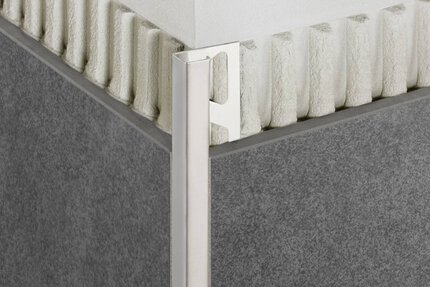
- 90° and 135° inside and outside corners, connectors, and end caps available
Find recommended accessories here

Profile Estimator
Discover what you need for tile protection and easy transitions.
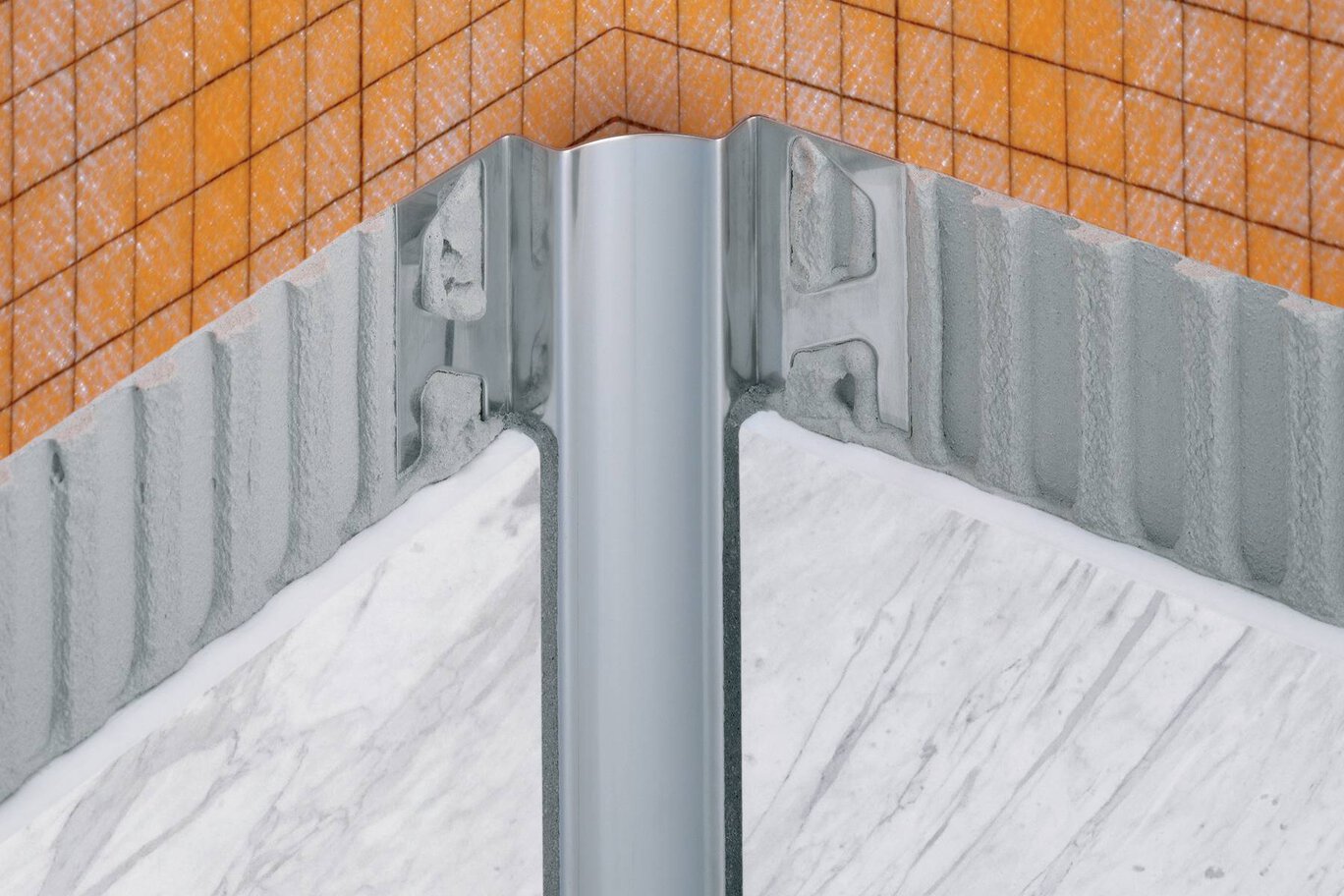
Schluter®-DILEX-EHK features trapezoid-perforated anchoring legs, made of stainless steel, which are secured in the mortar bond coat, and a stainless steel cove section that forms the visible surface. The profile’s 23/32" (18.5 mm) radius prevents the accumulation of dirt and makes cleaning simple. The profile separates tile fields that meet at inside corners where limited movement is expected. Accessories for DILEX-EHK include: inside and outside corners, connectors, and end caps.
DILEX-EHK requires no special maintenance or care and are resistant to mold and fungi. Clean profile using common household cleaning agents. Stainless steel surfaces exposed to the environment or aggressive substances should be cleaned periodically using a mild household cleaner. Regular cleaning maintains the neat appearance of stainless steel and reduces the risk of corrosion. All cleaning agents must be free of hydrochloric acid, hydrofluoric acid, and chlorides. Stainless steel surfaces develop a sheen when treated with a chrome-polishing agent.
1. Select profile according to tile thickness and format.
2. Using a notched trowel, apply thin-set mortar over the area where the trapezoid-perforated anchoring legs will be placed.
3. Press the perforated anchoring leg(s) of the profile into the mortar.
Note: Install inside and outside corners, connectors, and end caps prior to setting tile. DILEX-EHK accessories are applied using a permanently elastic, waterproof adhesive (e.g., KERDI-FIX or silicone). Prior to application, any contact-inhibiting substances (e.g., grease, etc.) must be removed. The connectors should overlap the profiles by at least 3/8" (10 mm).
4. Trowel additional thin-set mortar where the tiles are to be installed.
5. Solidly embed the tiles, ensuring full coverage and support of the tile edges, and align flush with the top of the profile, leaving a joint of approximately 1/16" – 1/8" (1.5 - 3 mm) between the tile and the profile.
6. Fill the joints completely with grout or setting material.
Warranties
FAQ
How do I cut profiles?
Schluter™ profiles are available in a variety of different materials , so methods for cutting vary. Below are best practices for cutting according...
Read moreThe tile I’ve chosen for my floor doesn’t have a matching cove base available. I’d rather not select another tile. Do you have any solutions?
Yes. Schluter-Systems offers various profiles that allow the user to produce a finished tile base with a cove...
Read moreCAD drawings
Specify our products using the


Watch & Learn
About the product

How to install a cove-shaped profile: Schluter®-DILEX-EHK profile

Introduction to Schluter® Profiles

Tips on How to Choose Your Profile Size in Relation to Your Tile

Tips on Cutting Profiles
Find some existing tutorials and project documentation videos to learn how-to get the best out of our products - for more fun in your life, start now!
Watch more videos / playlists