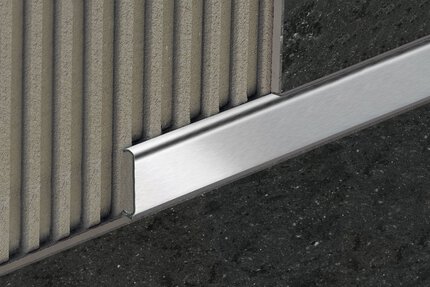
Schluter®-QUADEC
Finishing and edge-protection profile with a squared reveal surface

- New! Now available in 10’ (3.05 m) lengths
- Prevents tile edges from chipping
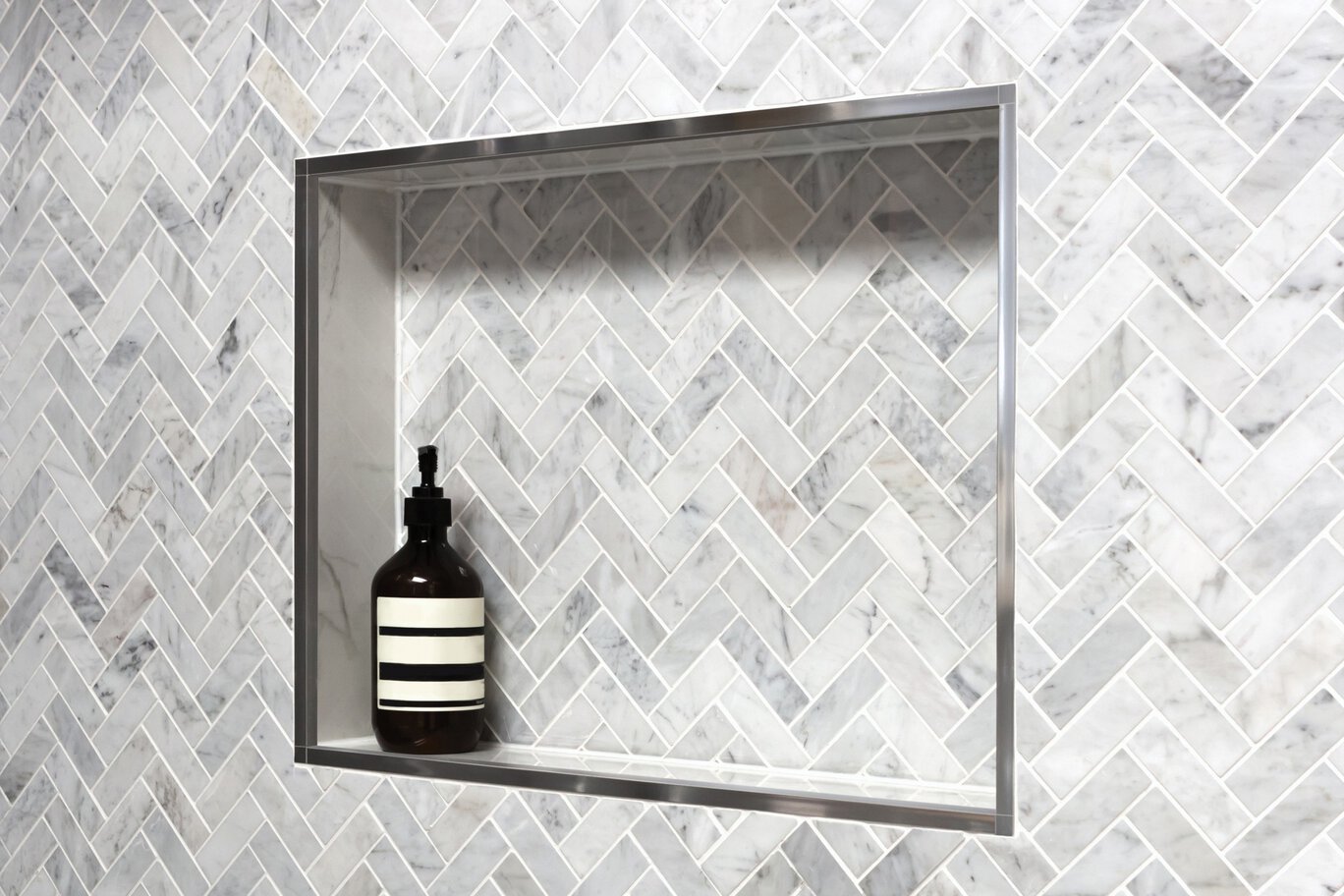
- Can be incorporated as an accent within tile fields on floors and walls
- Create modern decorative designs, interesting contrasts, and match with tile and grout
- Combine with QUADEC-FS and/or DESIGNLINE for increased design options
- QUADEC in stainless steel can be used as a stair nosing or floor transition profile
- Now available in 9/32" (7 mm) height in stainless steel and brushed stainless steel
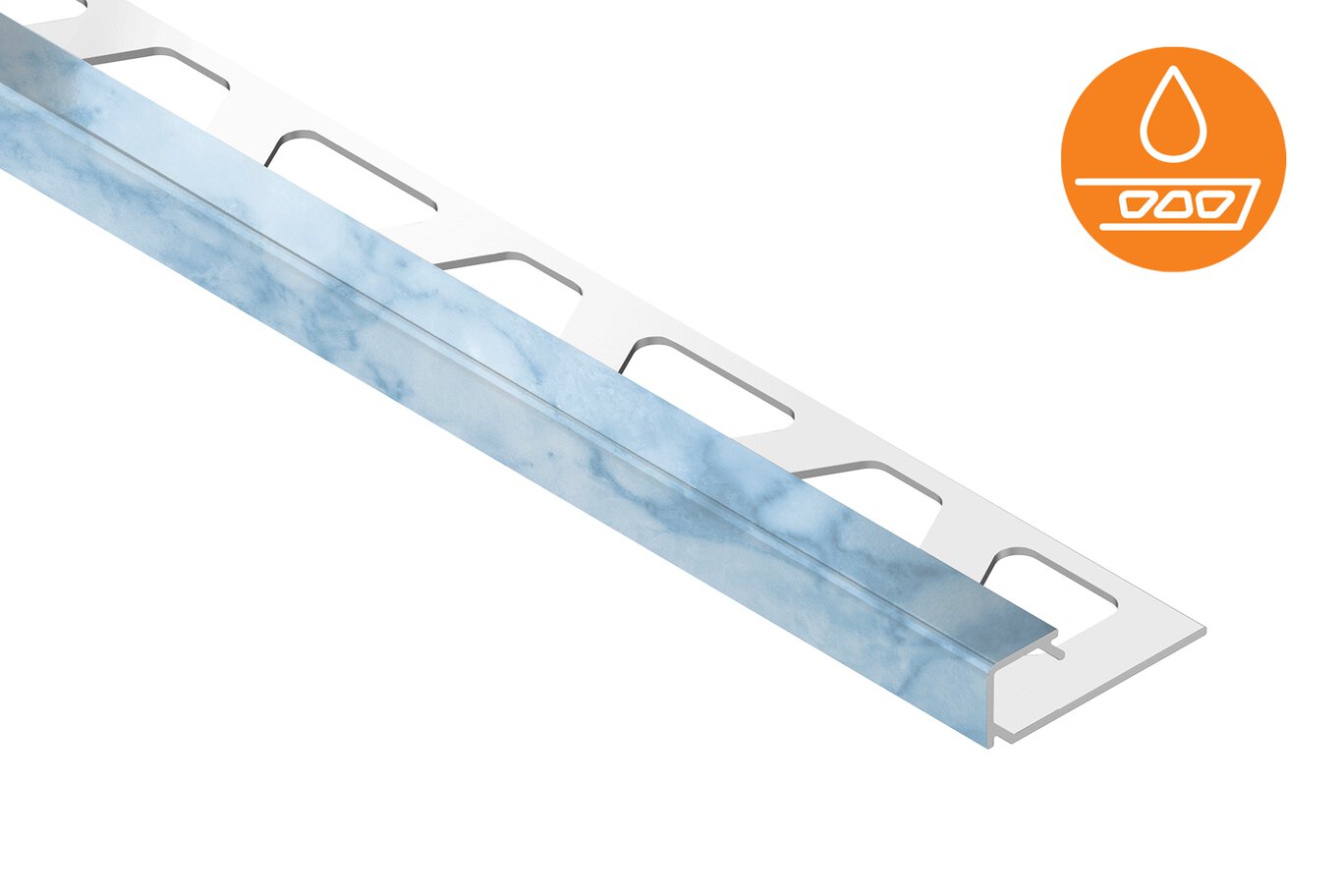
- Available in stainless steel, anodized aluminum, PVC, textured and color-coated aluminum
- Also available in square check and leather texture finishes


Find recommended accessories here

Profile Estimator
Discover what you need for tile protection and easy transitions.
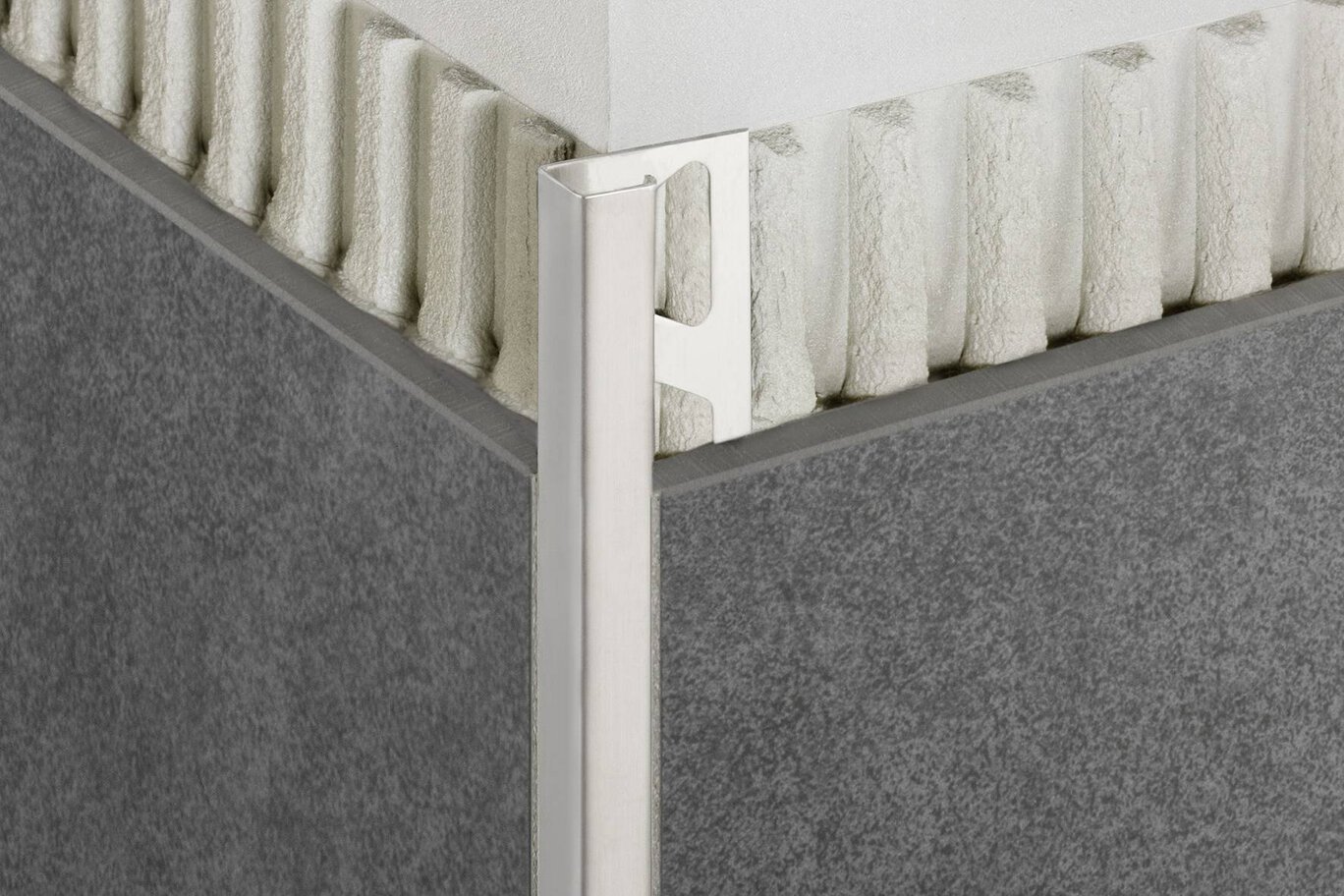
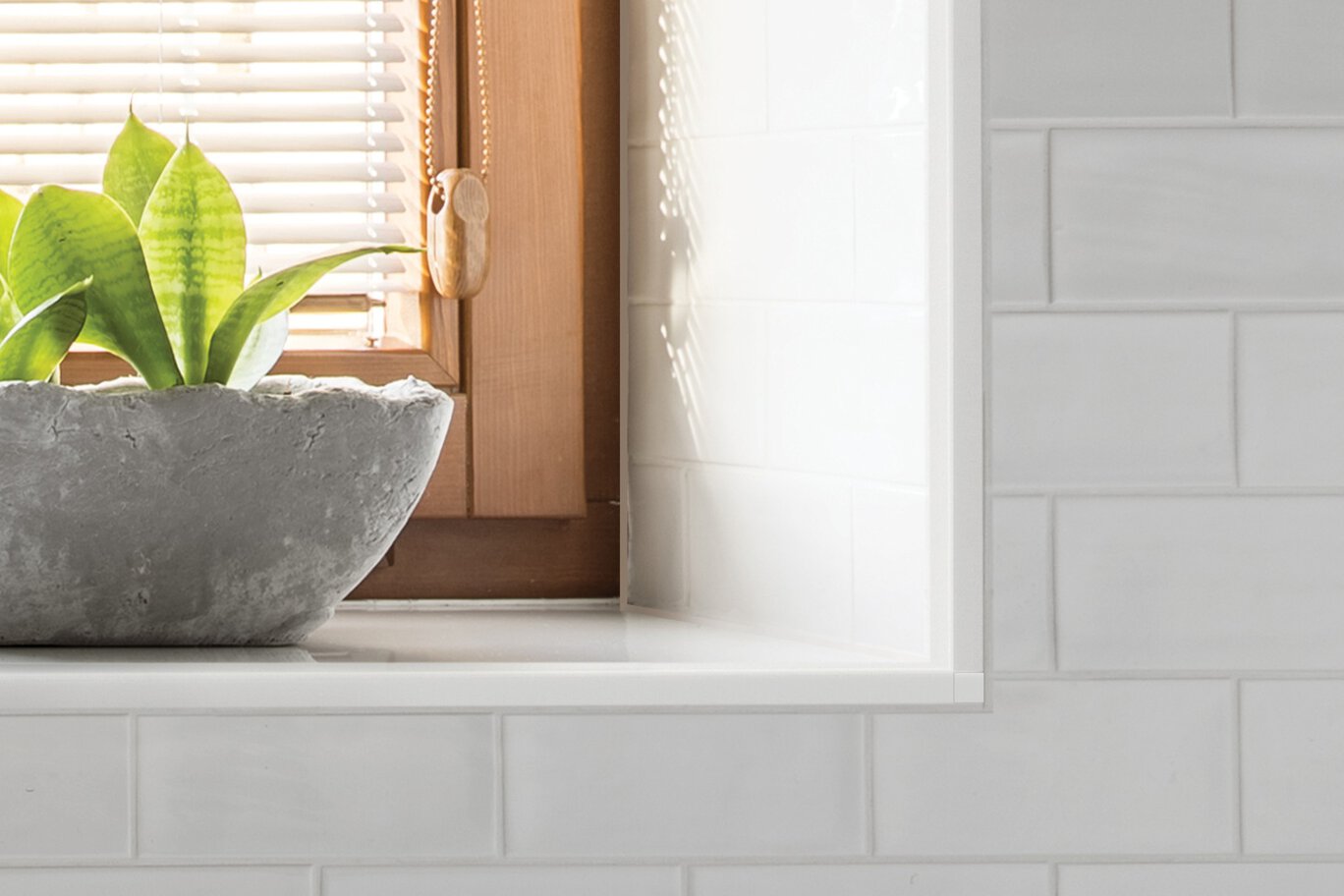
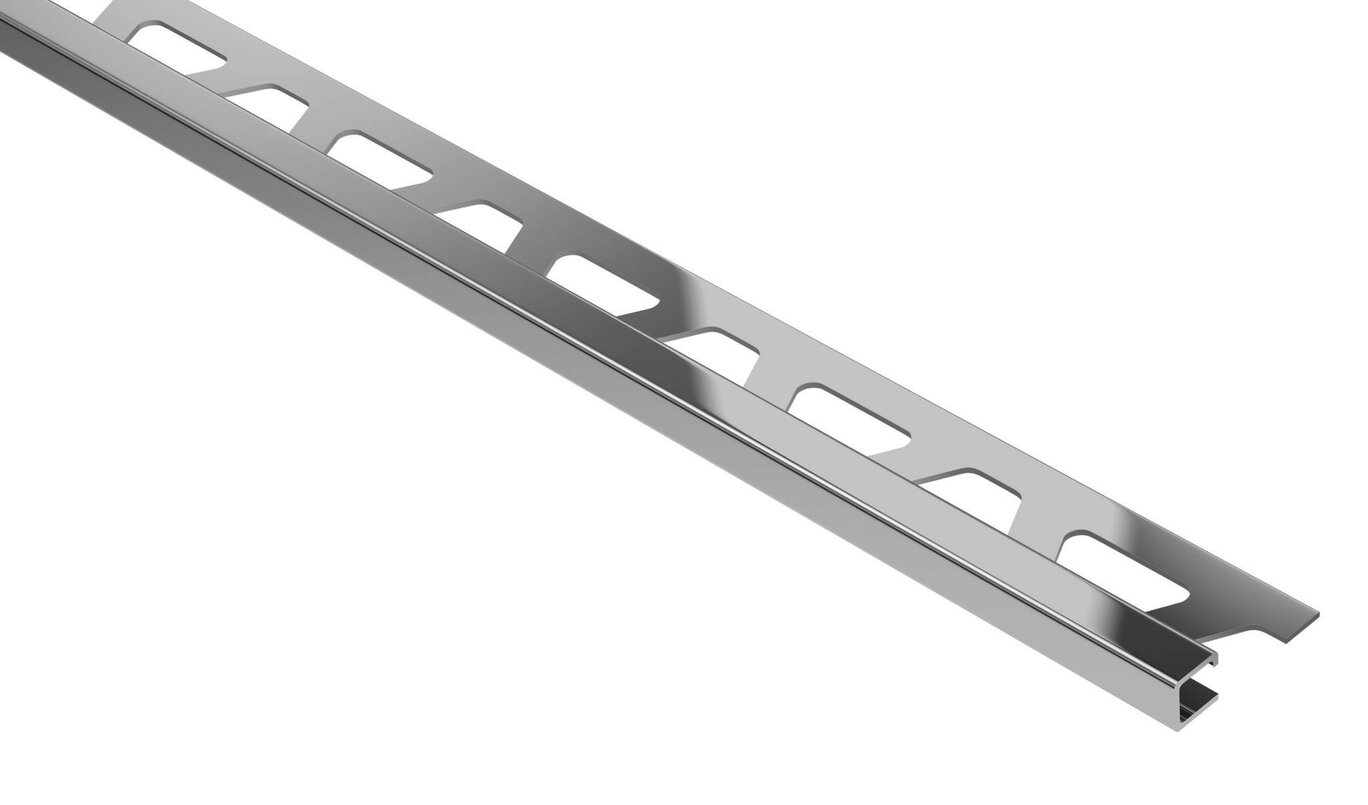
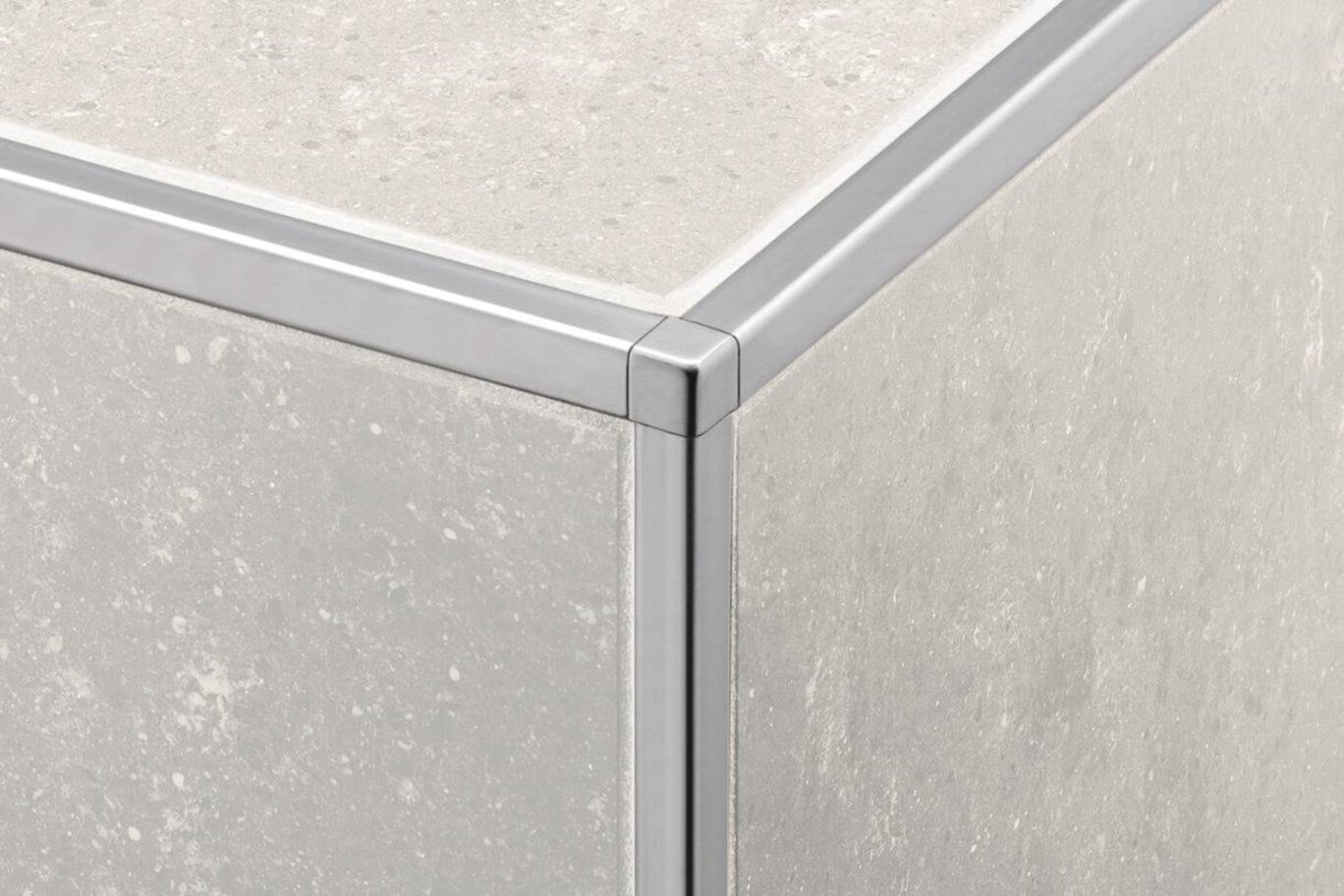
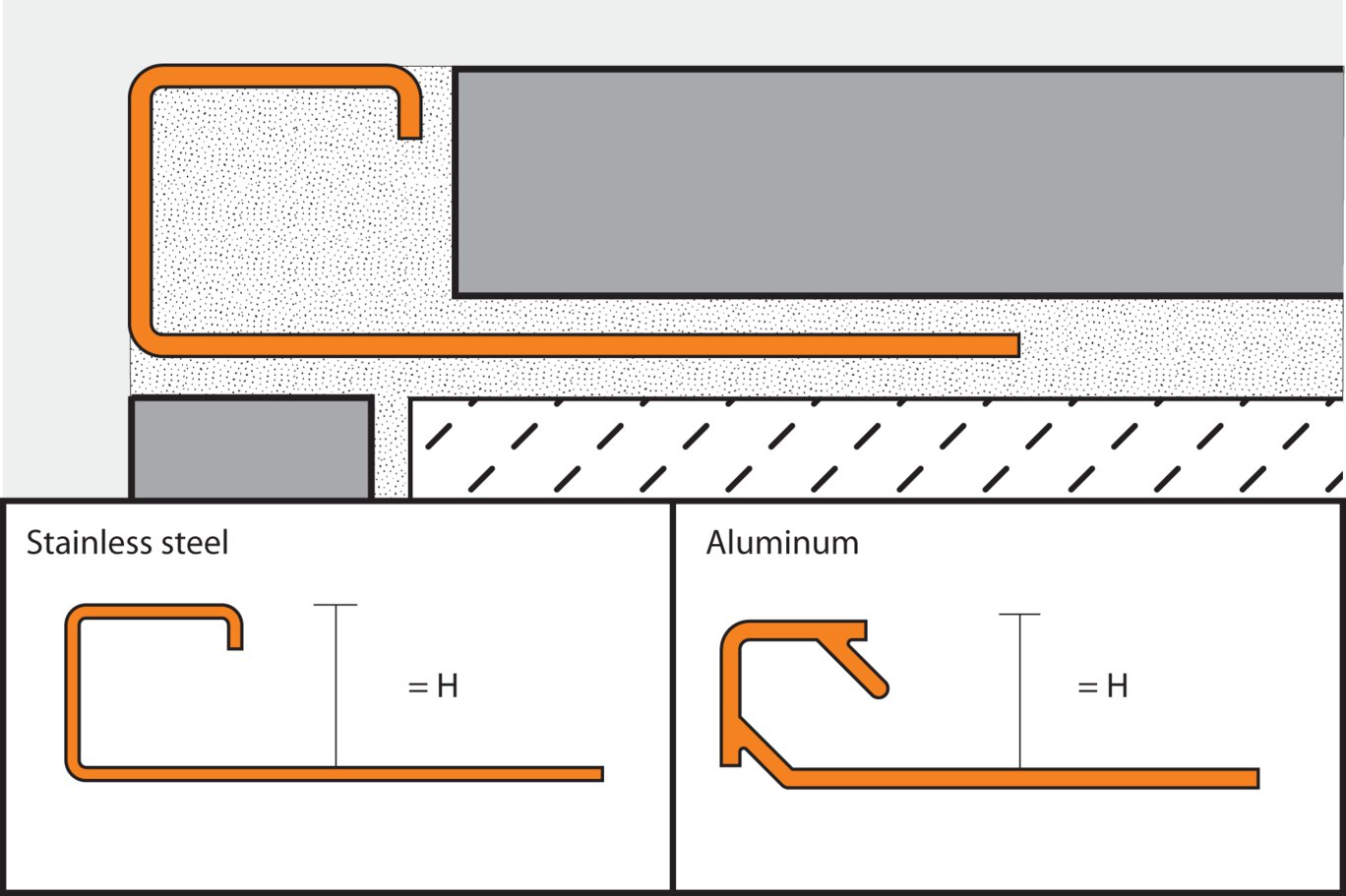
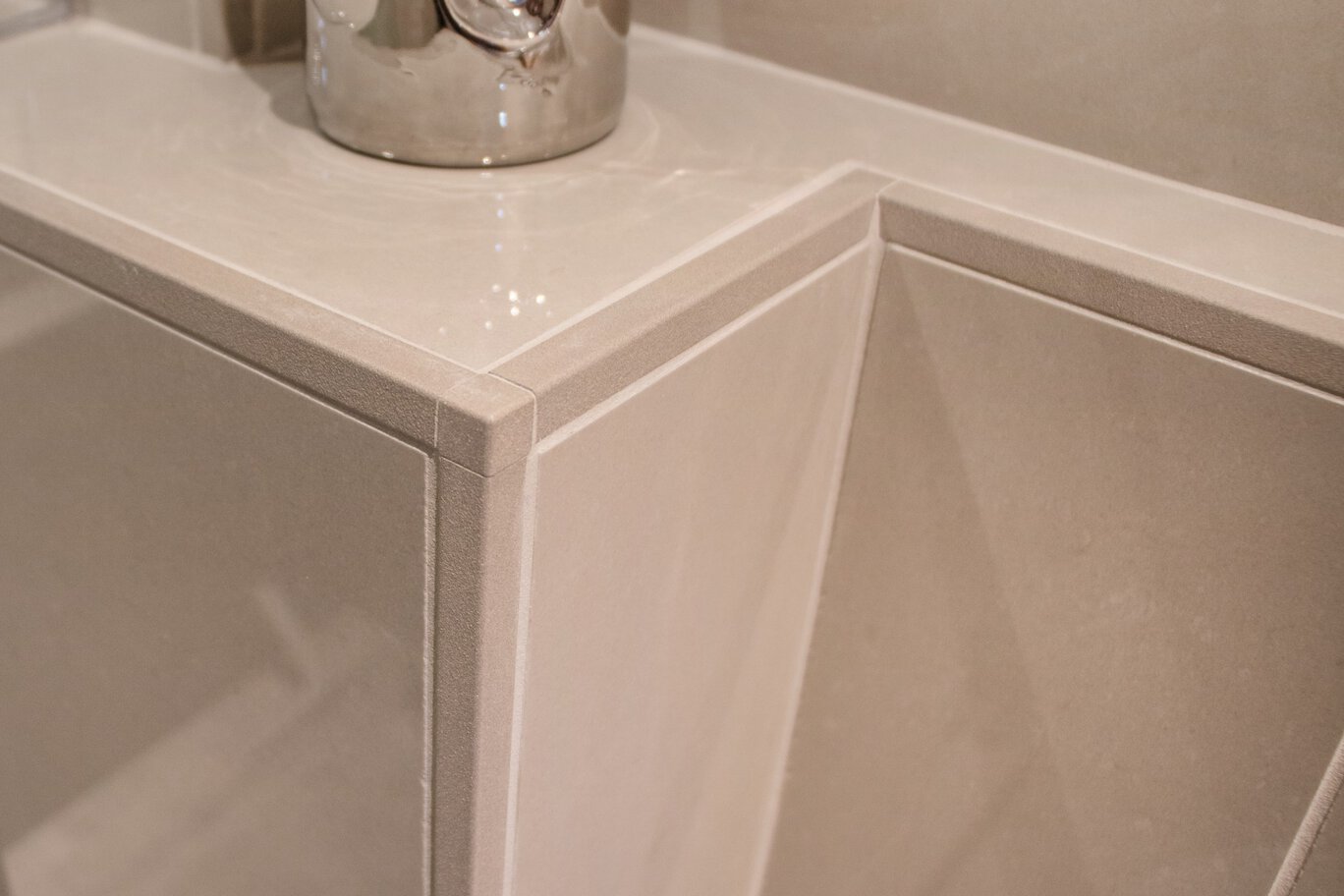
Schluter®-QUADEC is a finishing and edge-protection profile for the outside corners of tiled surfaces. It features a trapezoid-perforated anchoring leg that is secured in the mortar bond coat beneath the tile and a reveal that forms a square outer corner along the surface edge.
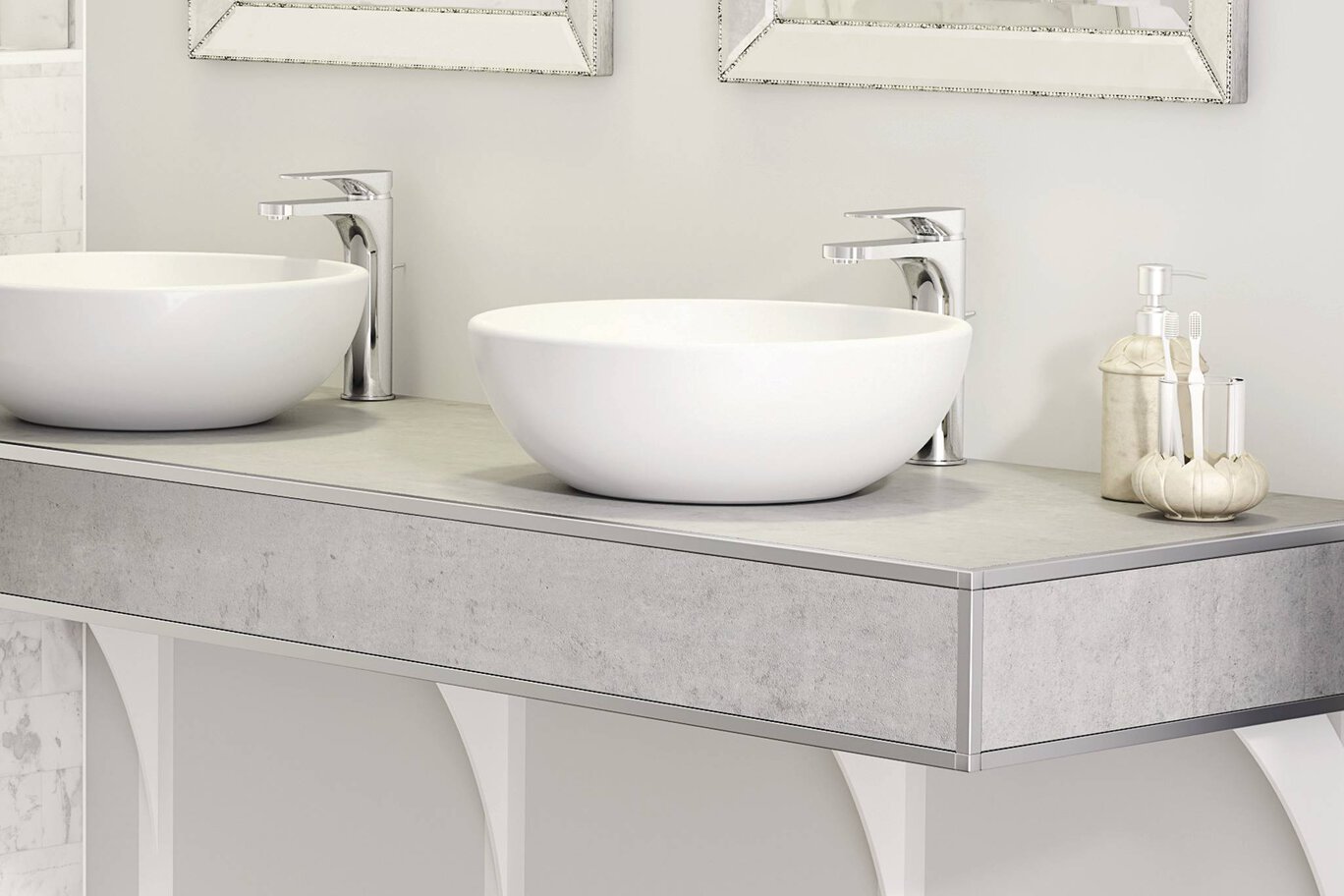
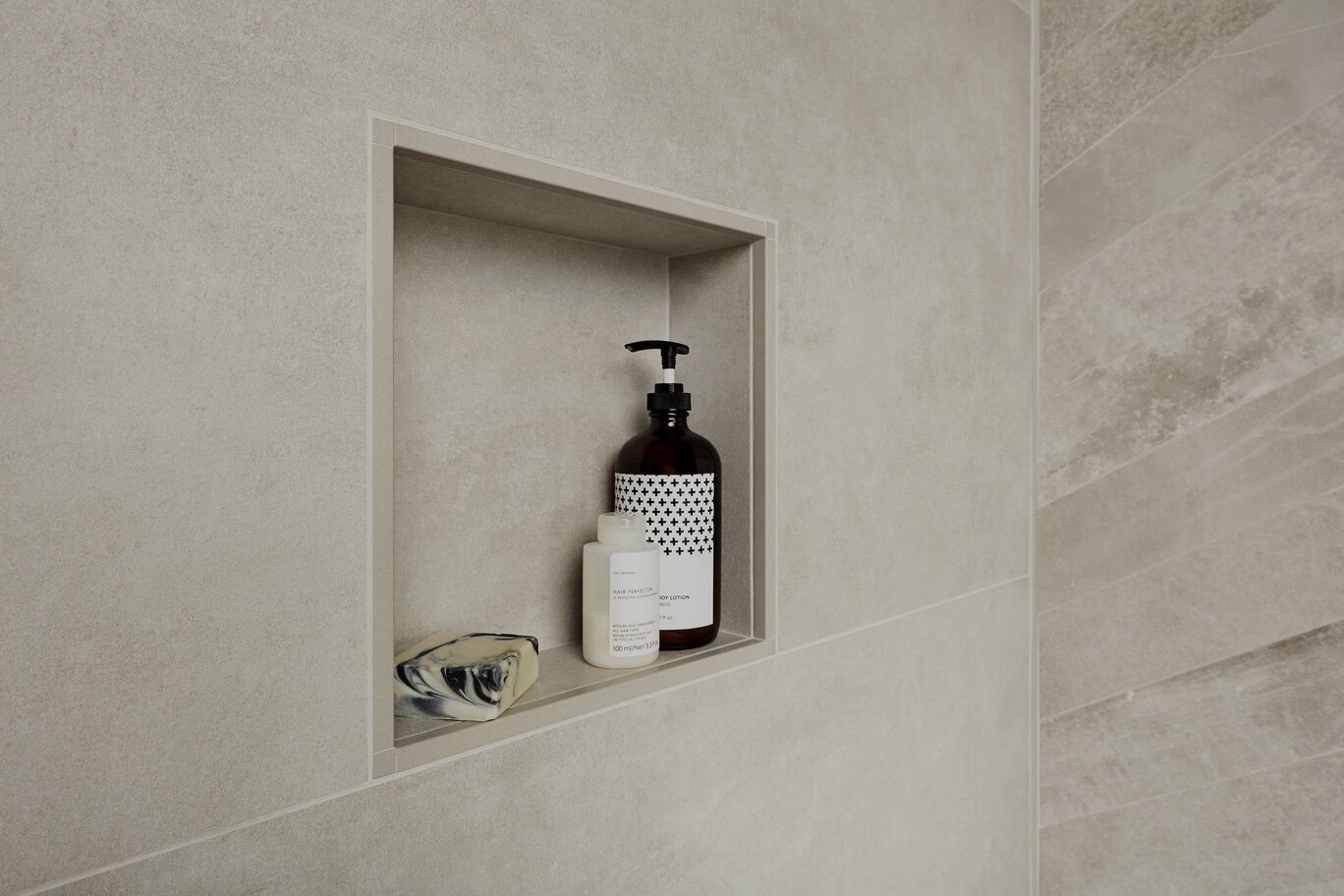
The profile is available in stainless steel, stainless steel with structured finish, anodized aluminum and textured color-coated aluminum. QUADEC allows for modern decorative design and interesting contrasts. The profile can be combined with the QUADEC-FS feature strip profile and the DESIGNLINE border profile for further design options. In addition to its decorative effect, the profile protects tile edges against damage caused by mechanical stresses.
QUADEC, in stainless steel, is particularly resistant to wear when used as edge protection. It may also be used as a stair nosing or floor transition profile. In addition, QUADEC is suitable for transitions, corners, or dado coverings with other covering materials; for example, carpet, parquetry, natural stone tiles, or poured epoxy coverings. The integrated joint spacer forms a defined joint cavity with the tile.
Note: QUADEC in stainless steel does not feature the integrated joint spacer. Matching inside/outside corners and connectors are available.
The Schluter®-QUADEC profile requires no special maintenance or care and is resistant to mold and fungi. Clean profiles periodically using neutral cleaning agents. Stainless steel surfaces exposed to the environment or aggressive substances should be cleaned periodically using a neutral cleaner.Regular cleaning maintains the neat appearance of stainless steel and reduces the risk of corrosion. Avoid the use of strong acids (e.g. hydrochloric or hydrofluoric) and base/alkaline cleaners (e.g. bleach, ammonia, chlorides). Do not use abrasive cleaning agents and tools. Stainless steel surfaces develop a sheen when treated with a chrome-polishing agent.Oxidation films on aluminum may be removed with a common polishing agent but will form again. In the case of anodized aluminum and color-coated aluminum, do not use abrasive cleaning agents.
1. Select the profile according to tile thickness and format.
2. Using a notched trowel, apply thin-set mortar to the area where the profile is to be placed. If the QUADEC profile is to be used as edging for an outside wall corner, finish tiling one wall first; then trowel thin-set mortar over the corner area of the second wall.
3. Press the perforated anchoring leg of the profile into the mortar and align.
4. Trowel additional thin-set mortar over the perforated anchoring leg to ensure full coverage and support of the tile edges.
5. Solidly embed the tiles so that the tiled surface is flush with the top of the profile; the profile should not be higher than the tiled surface, but rather up to approx. 1/32" (1 mm) lower.
6. Set the tile to the integrated joint spacer, which ensures a uniform joint of 1/16" - 1/8" (1.5 - 3 mm). With the stainless steel profiles, leave a space of approximately 1/16" - 1/8" (1.5 - 3 mm).
7. Fill the joint completely with grout or setting material.
8. Work with materials and tools that will not scratch or damage sensitive surfaces. Setting materials must be removed immediately, especially from aluminum.
Note: Matching corners and connectors are available. Corners are held in place with thin-set mortar. Fill the ends of the profile with thin-set mortar prior to inserting the accessories. Connectors are held in place with a friction fit. Insert the connector into the profile approximately half the length of the connector piece and connect the adjacent profile.
FAQ
How do I cut profiles?
Schluter™ profiles are available in a variety of different materials , so methods for cutting vary. Below are best practices for cutting according...
Read moreCAD drawings
Especifique nuestros productos utilizando el


Watch & Learn
About the product

Cómo instalar un remate para cantos de cerámica sobre paredes: Schluter®-QUADEC.

Introducción los perfiles Schluter®

Consejos para elegir la altura de su perfil en relación con su baldosa
Find some existing tutorials and project documentation videos to learn how-to get the best out of our products - for more fun in your life, start now!
Watch more videos / playlists