How Schluter Connects Plumbing and Waterproofing in Commercial Drains
Define the connection before construction begins.
In commercial construction, the best installations are the ones nobody notices.

The tile is flat. The grout lines are tight. The drain sits flush with the floor. Water moves where it should. The building performs. And the people who specified, designed, and built that shower move on to the next project with confidence.
Getting there requires two systems to work as one: plumbing and waterproofing. They are designed by different disciplines, installed by different trades, and they meet at a single point. How that connection is defined makes all the difference.
Two Systems. One Connection Point.
A commercial shower is not one system. It is two systems that have to work together seamlessly.
The plumbing system manages water flow and drainage. The waterproofing system protects the building structure. Plumbing is specified under Division 22. Tile and waterproofing live in Division 09. They are designed separately, and they are built separately. But at the drain, they have to become one.
For decades, that connection was handled through coordination between trades, sequenced carefully on site. A mortar bed, a pan liner, a clamping ring, tile on top. When each step came together as planned, the system performed exactly as intended.
Schluter looked at that process and asked a straightforward question: what if the connection between those two systems could be defined before construction began, rather than assembled during it?
When the connection between plumbing and waterproofing is resolved at the specification stage, the installation has a clearer path from the first day on site to the last.
The Bonding Flange: A Defined Connection
The answer to that question is the bonding flange, and it is the engineering principle at the heart of every Schluter KERDI-DRAIN and KERDI-LINEassembly.
A bonding flange is a wide, flat surface integrated directly into the drain body. The KERDI waterproofing membrane bonds directly to this surface, creating a continuous, topical seal at the drain opening. The connection is complete, surface-level, and established before a single tile is set.
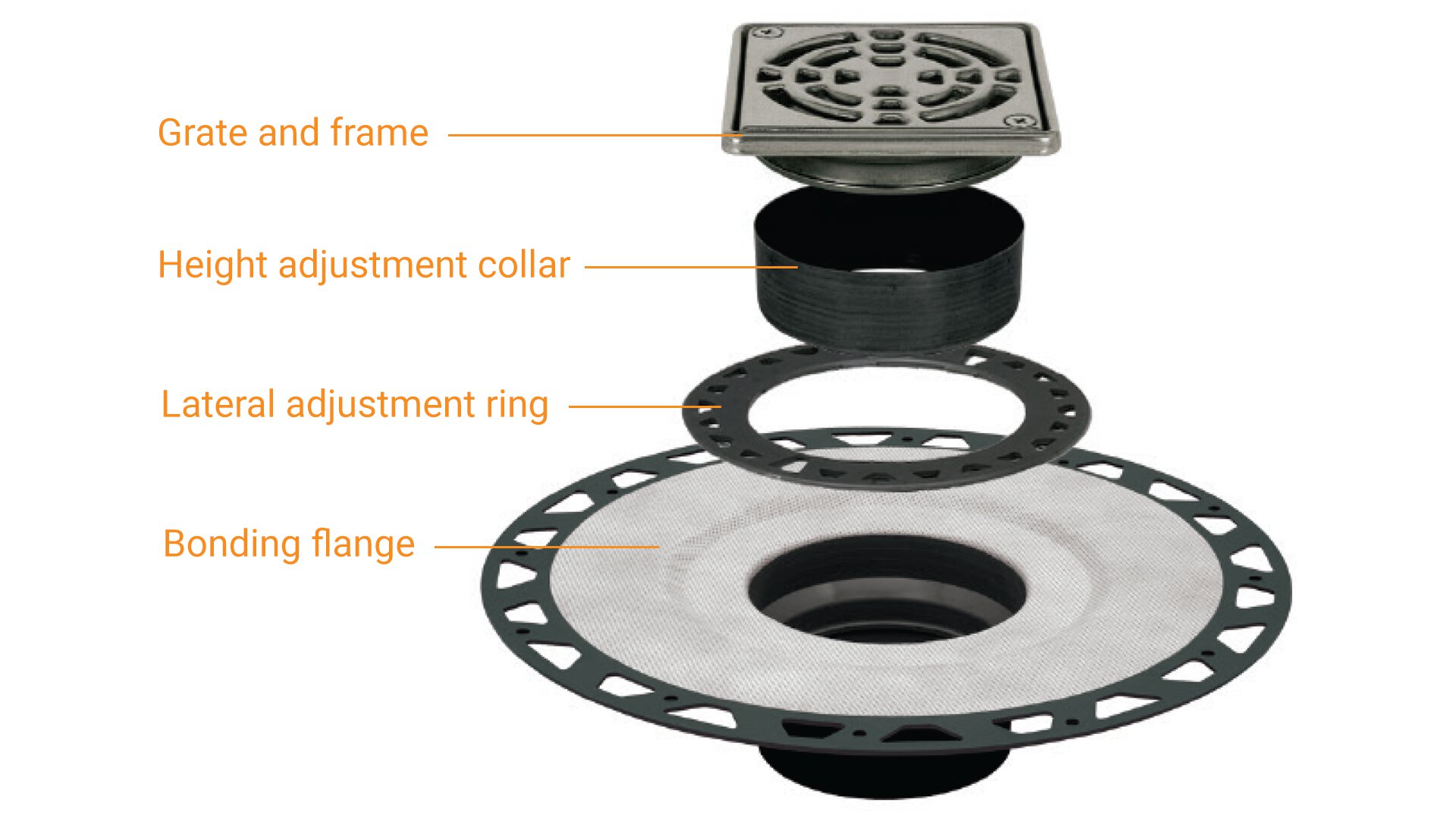
For mechanical engineers, this changes the nature of the drain specification. The drain is no longer just a plumbing component. It is the defined interface between the plumbing system and the waterproofing system. Specifying a KERDI-DRAIN means specifying that connection clearly, at the design stage, with a recognized method behind it.
For tile contractors, it means arriving at a drain connection that is already established. The membrane is bonded. The integration point is clear. The assembly can move forward with confidence.
For general contractors, it simplifies coordination. The handoff between trades at the drain is no longer something to manage in the field. It is something that has already been designed.
Point Drains and Linear Drains: The Same Principle in Every Format
Schluter offers the bonding flange connection in both point drain and linear drain formats, which means the same integration logic applies regardless of how the shower floor is designed.
The KERDI-DRAIN point drain brings the bonding flange to a single drain body at the center or low point of the shower floor. The KERDI membrane bonds directly to the flange. The grate assembly completes the finish. The result is a surface that is entirely continuous, from the tile field to the drain opening, with no exposed liner edge and no visible transition.
The KERDI-LINE linear drain extends that same principle across a channel body. The bonding flange runs the full length of the drain, and the KERDI membrane integrates along it. Linear formats are well suited to barrier-free applications and contemporary commercial designs where the floor slopes in a single plane toward a wall-mounted drain. The geometry changes. The connection principle does not.
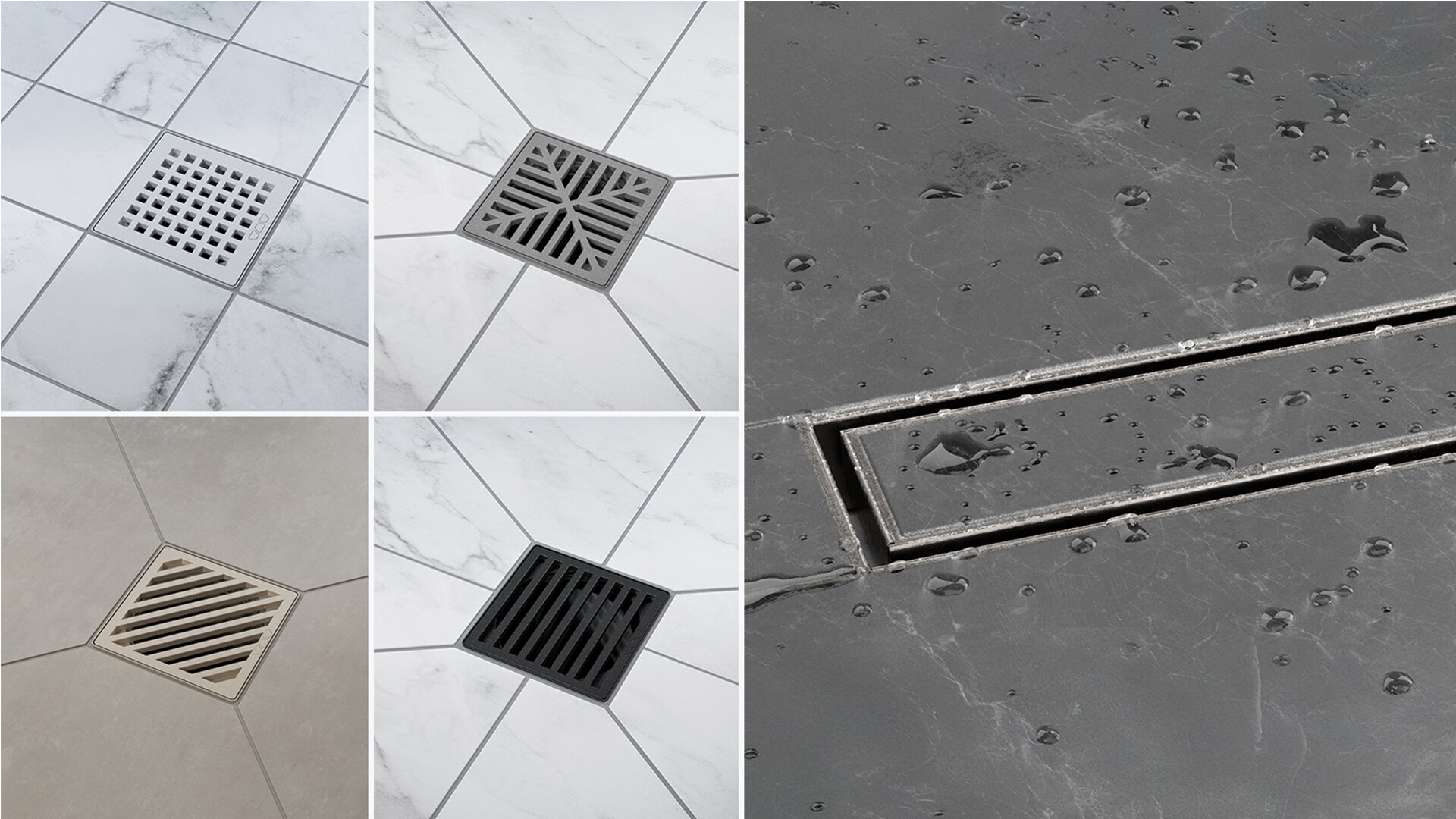
Across both formats, Schluter offers a range of grate options in different materials, finishes, and profiles. The visual result can be adapted to suit the design intent of the space, from a straightforward commercial wet room to a finished hospitality or healthcare environment. What stays consistent underneath is the waterproofing connection.
For projects where a clamping ring drain is already in place, the KERDI-DRAIN-A and KERDI-LINE-A adaptor kits make the transition to an integrated bonding flange system possible without replacing the existing drain body. The adaptor converts the existing assembly to accept the KERDI membrane connection directly, which means the benefits of a bonding flange system are available on renovation and retrofit projects, not just new construction. The path to a better-integrated installation does not require starting from scratch.
The bonding flange connection is available across new construction and existing installations. The same integration logic applies whether the project is breaking ground or upgrading what is already there.
Recognized by Industry Standards
The bonding flange approach is not a proprietary workaround. It is a recognized method.
TCNA Method 422 addresses bonded waterproof membrane systems that integrate directly with the drain connection. For specifiers, this matters. Including a Schluter bonding flange drain in project documents means specifying to a recognized standard, with a clear and defined method behind it.
That clarity supports better project documentation, cleaner coordination between trades, and a more straightforward path through review and inspection.
What Changes, and What Stays the Same
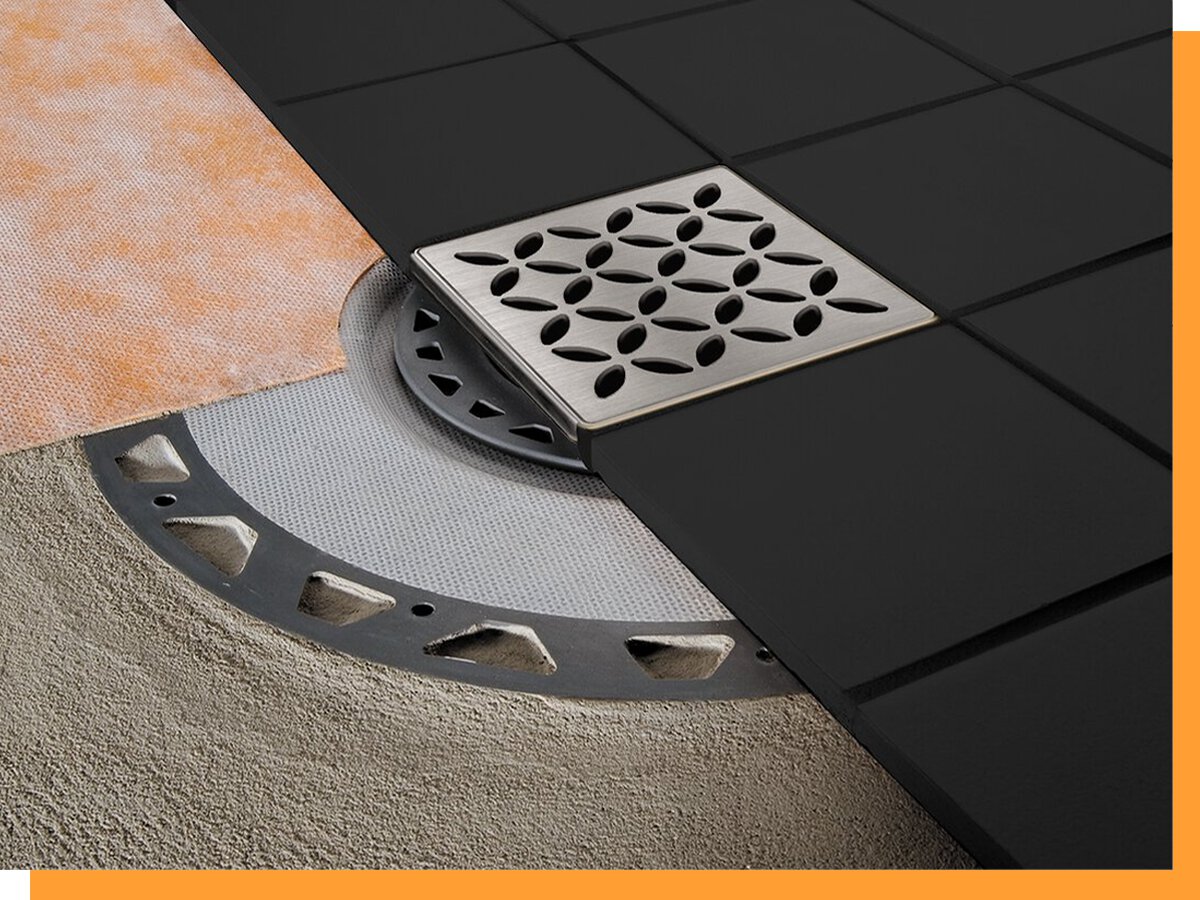
Specifying a bonding flange drain does not require rethinking how a project is built. Drains are still specified. Plumbing connections are still made in the same way. Tile assemblies are still installed by the same trades using established methods.
What changes is where the connection between systems is resolved. Instead of the field, it is the specification. Instead of a sequence of steps to coordinate, it is a single defined interface between two systems that both perform as designed.
For teams working across multiple commercial projects, that consistency adds up. The same drain system, the same integration logic, the same reliable result, whether the project is a hotel in one city or a healthcare facility in another.
The Finish and the Foundation
A Schluter drain assembly is two things at once. Above the floor, it is a design decision. The grate is visible, intentional, and available in a range of materials, finishes, and profiles that can be matched to the aesthetic of the space. Below the floor, it is a waterproofing decision. The bonding flange creates a continuous, surface-level connection between the drain and the KERDI membrane before a single tile is set.
Both matter. Both are resolved in the specification, not on site.
That is what makes the system worth specifying on a commercial project. The trades have a defined interface to work from. The building has a waterproofing connection that is complete and verifiable. And the finished space has a drain that contributes to the design rather than detracting from it.
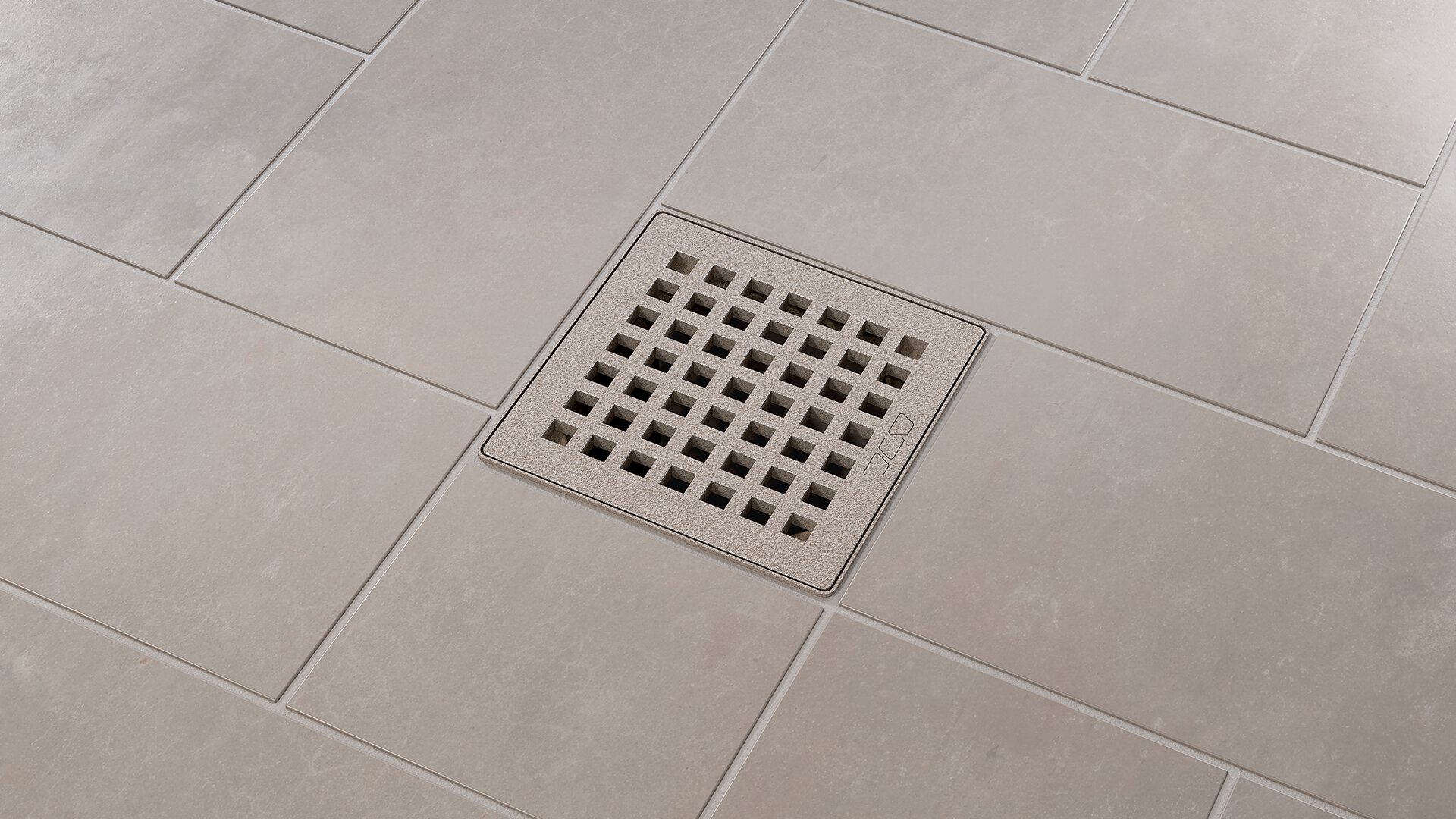
The grate completes the design. The bonding flange completes the system.
Explore the Schluter drain portfolio:
Questions about specifying Schluter drain systems on your next commercial project? Contact CommercialSupport@schluter.com