Schluter®-RENO-TK
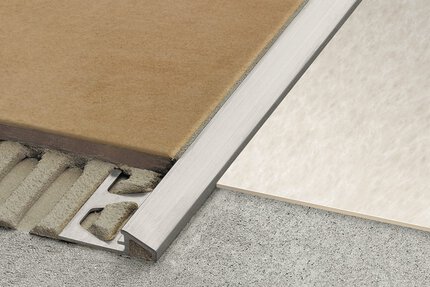
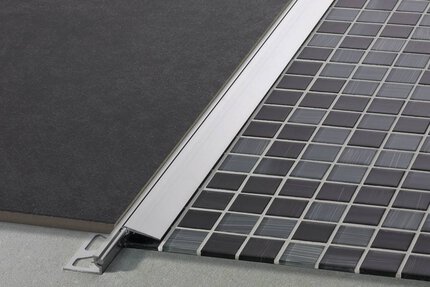
Perfil de protección de canto con reborde mínimo para transiciones con inclinación

- Previene el astillado de las baldosas.
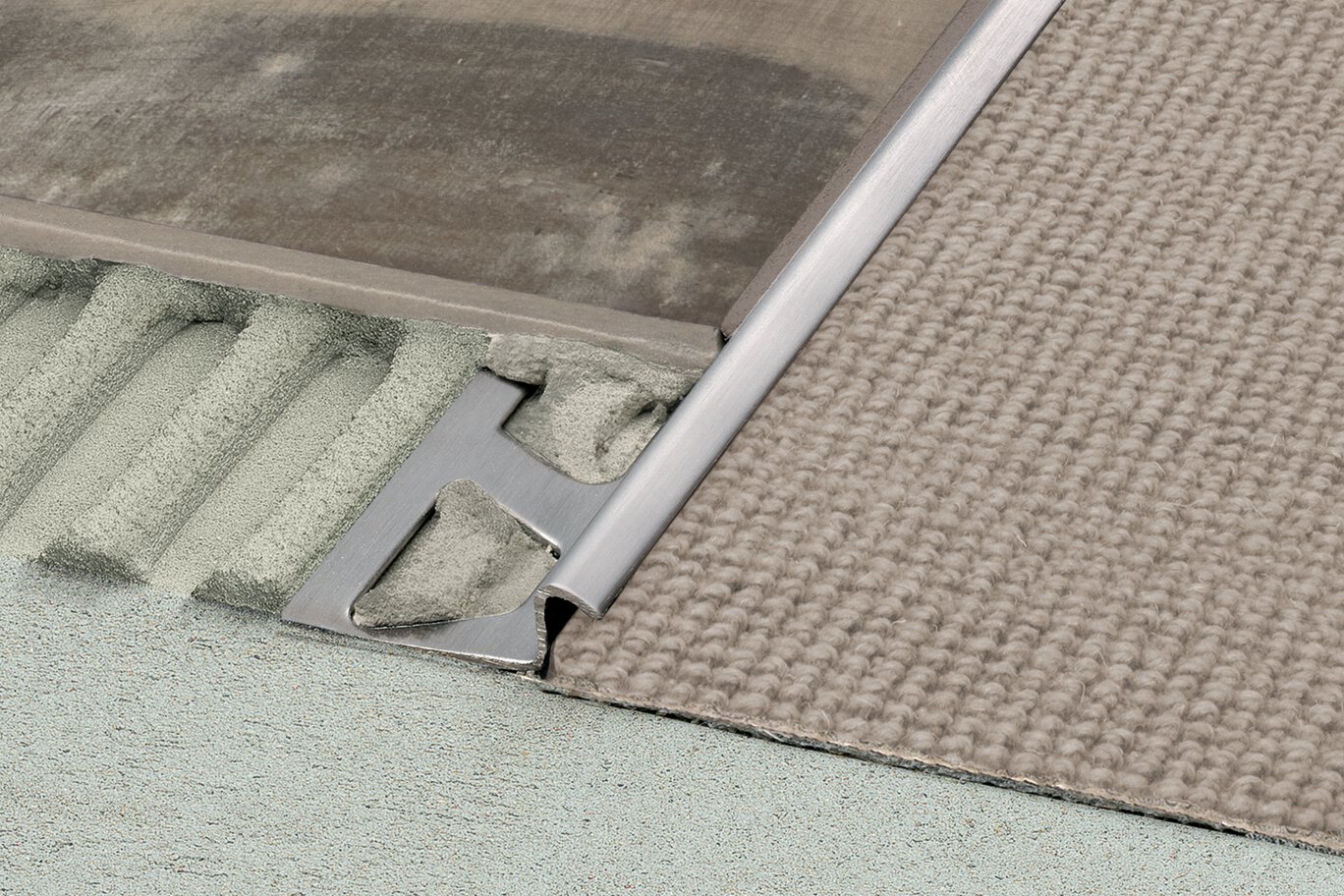
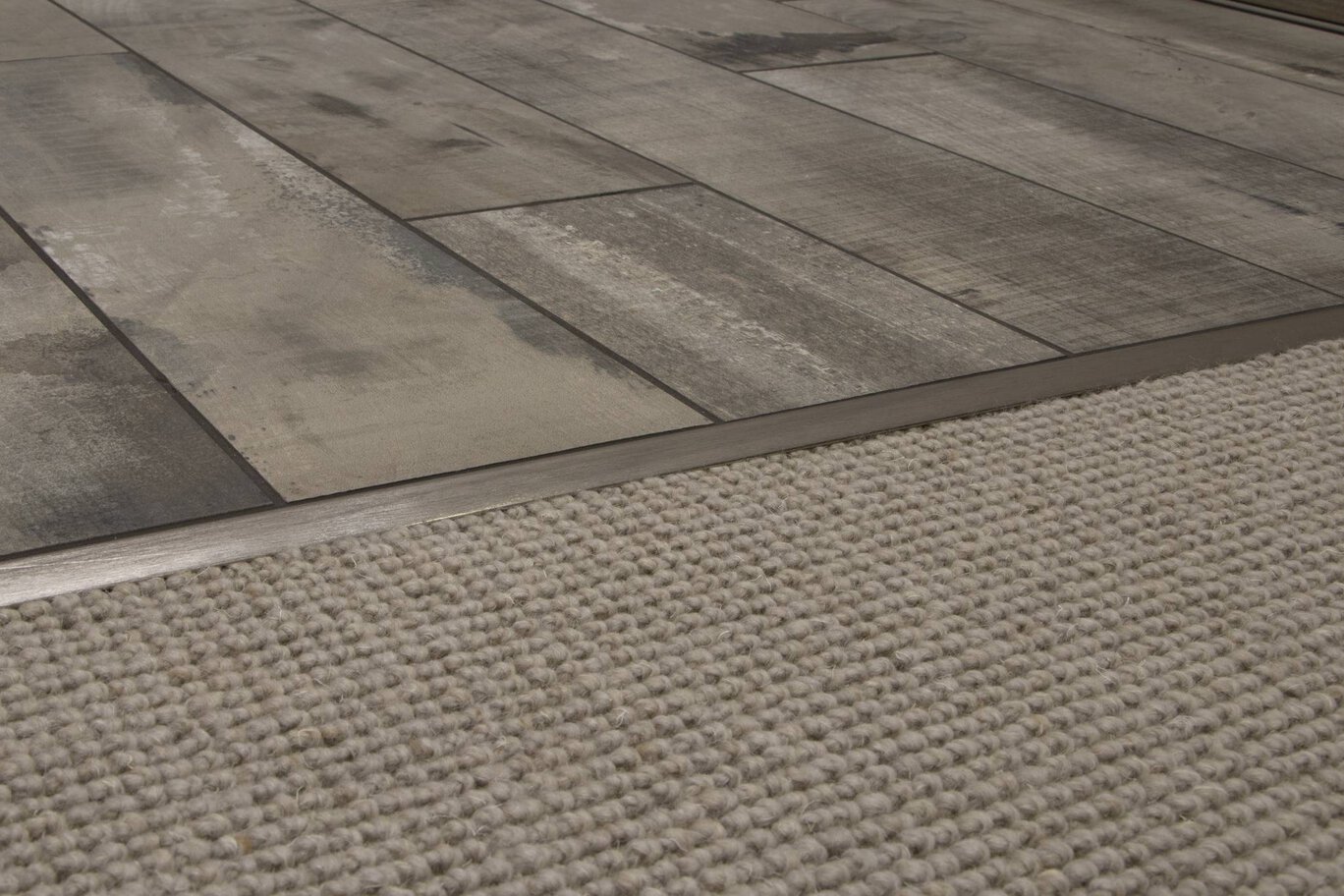
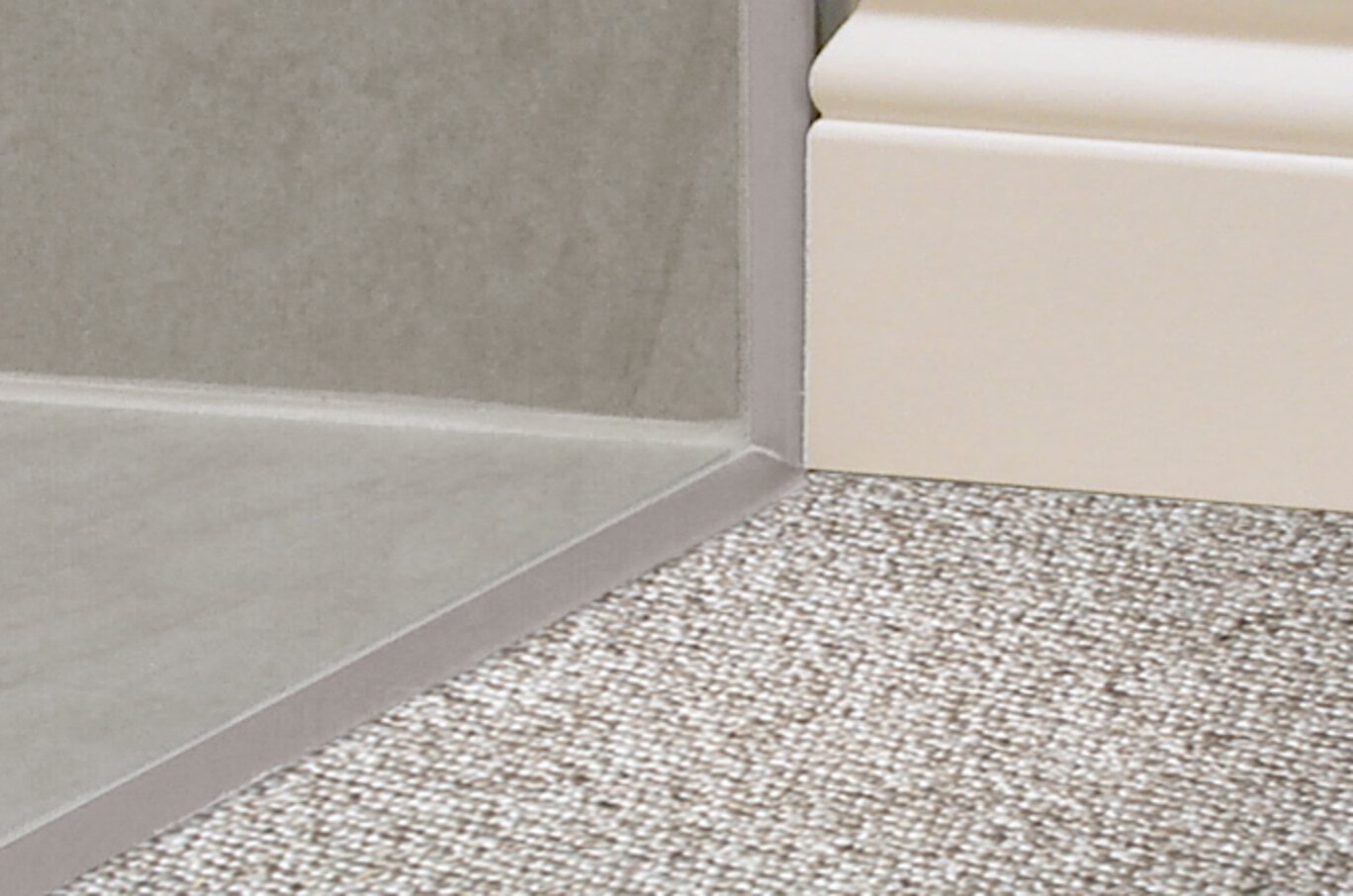
- Se utiliza comúnmente para crear una transición entre un revestimiento de baldosas y una alfombra a una altura menor.
- El canal de 1/4"(6 mm) debajo del reborde inclinado protege y oculta el borde de la alfombra
- Cumple con ADA
- En ciertos modelos, el ala de fijación está disponible con una perforación radio que permite utilizar el perfil para formar curvas.
Encuentre aquí los accesorios recomendados

Estimador de perfiles
Descubra lo que necesita para proteger las baldosas y facilitar las transiciones.
Schluter® RENO-TK está diseñado para ofrecer una transición fluida entre el revestimiento de baldosas y revestimientos a menor altura, comúnmente alfombra.
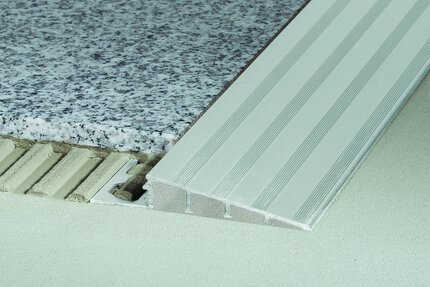
El perfil está disponible en acero inoxidable, latón macizo y aluminio anodizado. RENO-TK Dispone de un ala de fijación perforada en forma trapezoidal que se fija en la capa de adherencia de mortero bajo la baldosa, y una superficie inclinada para evitar tropiezos y caídas y proteger los bordes. El canal de 1/4"(6 mm) debajo del borde inclinado del perfil esconde y protege el borde cortado de los revestimientos adyacentes de menor altura. Todos los tamaños de RENO-TK cumplen con los requisitos de ADA (Americans with Disabilities Act).
RENO-TK en aluminio anodizado dispone de un espaciador de junta integrado que establece una cavidad de junta definida entre la baldosa y el perfil.
El ala de fijación de RENO-TK, en latón macizo y aluminio anodizado, tamaño de 60 a 100, está disponible con un radio especial de perforación "R" que permite que el perfil sea utilizado para formar curvas.
El perfil Schluter® RENO-TK no requiere mantenimiento ni cuidados especiales y es resistente al moho y a los hongos. Limpie regularmente el perfil con un producto de limpieza neutro. Las superficies en acero inoxidable expuestas a las agresiones ambientales o a sustancias agresivas deben limpiarse periódicamente con un producto de limpieza neutro. La limpieza regular mantiene la apariencia del acero inoxidable y reduce el riesgo de corrosión. Evite el uso de ácidos fuertes (por ej., hidroclorhídrico o fluorhídrico) y productos de limpieza alcalinos (por ej., lejía, amoníaco o cloruros). No use productos de limpieza abrasivos ni herramientas. Las superficies de acero inoxidable adquieren brillo cuando se tratan con un producto pulidor de cromo. En el caso de aluminio anodizado, no utilice productos de limpieza abrasivos.
1. Seleccionar el perfil según espesor y formato de baldosa.
2. Con llana dentada aplicar mortero fino en la zona donde se va a colocar el perfil.
3. Presione el lado de anclaje perforado del perfil en el mortero y alinéelo.
4. Aplique con llana más mortero de capa delgada sobre la pata de anclaje perforada para garantizar una cobertura total y soporte de los bordes de las losas.
5.Incrustar sólidamente las baldosas de modo que la superficie embaldosada quede al ras con la parte superior del perfil; el perfil no debe sobrepasar la superficie del azulejo, sino hasta aprox. 1/32" (1 mm) más bajo.
6.Coloque la loseta en el espaciador de juntas integrado, lo que garantiza una junta uniforme de 1/16" - 1/8" (1,5 - 3 mm). Con los perfiles de acero inoxidable, deje un espacio de aproximadamente 1/16" - 1/8" (1,5 - 3 mm).
7. Llene la junta completamente con lechada o material de fraguado.
8- Quite los residuos de mortero o de lechada de la superficie visible del perfil.
Hoja de datos de seguridad
FAQ
¿Cómo corto los perfiles?
Los perfiles Schluter® están disponibles en diferentes materiales, por lo que los métodos de corte varían. A continuación, se indican las mejores prácticas de corte según...
Leer másUna vez instalada la baldosa, quedará más alta que la alfombra adyacente. ¿Qué perfil recomendaría para esta transición desigual?
El perfil Schluter®-RENO-TK proporciona una transición inclinada entre la baldosa y la alfombra y presenta un canal debajo…
Leer másDibujos CAD
Especifique nuestros productos utilizando el


Ver y aprender
Acerca del producto

Cómo instalar una transición de baldosas en pisos: Schluter®-RENO-TK

Introducción los perfiles Schluter®

Consejos para elegir la altura de su perfil en relación con su baldosa
Cómo aplanar su substrato para los perfiles Schluter®
Encuentre tutoriales y videos de documentación de proyectos para aprender cómo sacar mejor provecho de nuestros productos, ¡empiece ahora y diviértase!
Ver más vídeos / listas de reproducción