Integración de perfiles en azulejos cerámicos
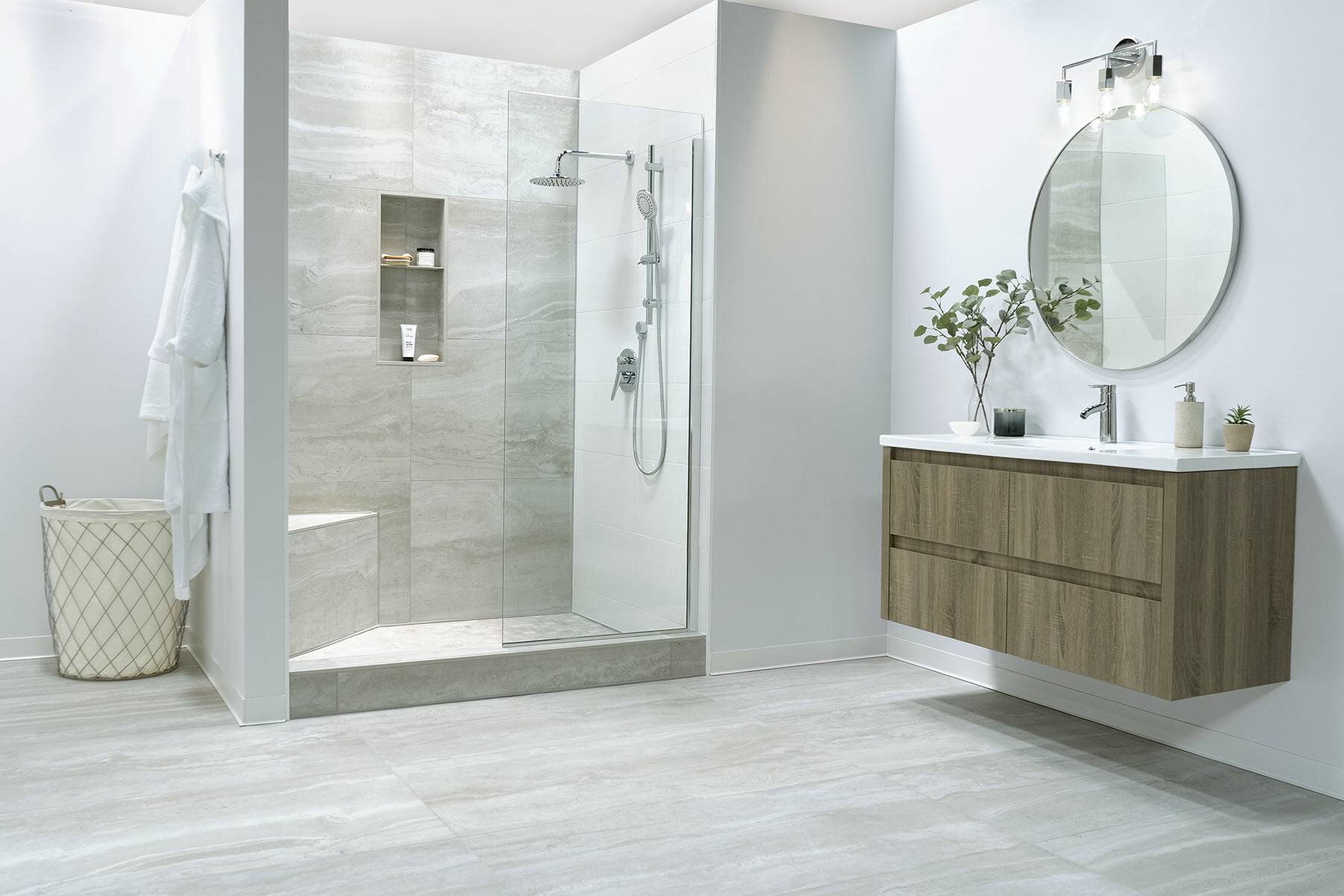
Con un número creciente de instalaciones de baldosas cerámicas que coexisten con otros recubrimientos de superficies, se hace necesario utilizar elementos de transición adecuados, o perfiles, en las superficies recubiertas con baldosas y alrededor de ellas. Los perfiles también se utilizan para cubrir y proteger los cantos de las baldosas instaladas en pisos y paredes, proporcionando un excelente recubrimiento de los cantos. Además, el uso de los perfiles como herramienta de transición ha inspirado a los diseñadores a utilizarlos como elemento decorativo. Consulte la información contenida en este artículo, en el que se destacan algunos aspectos importantes de los perfiles:
Tipos de aplicación de perfiles
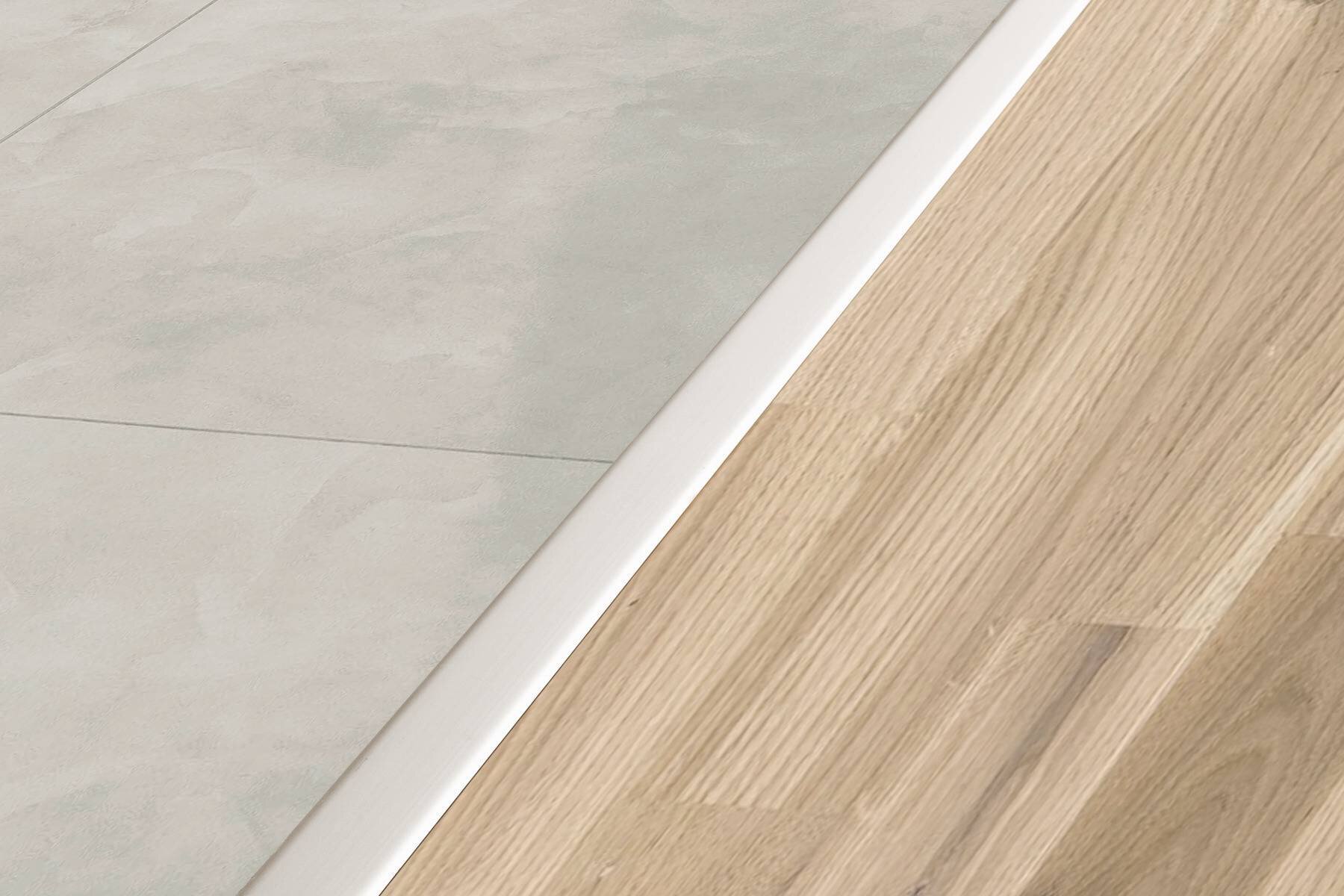
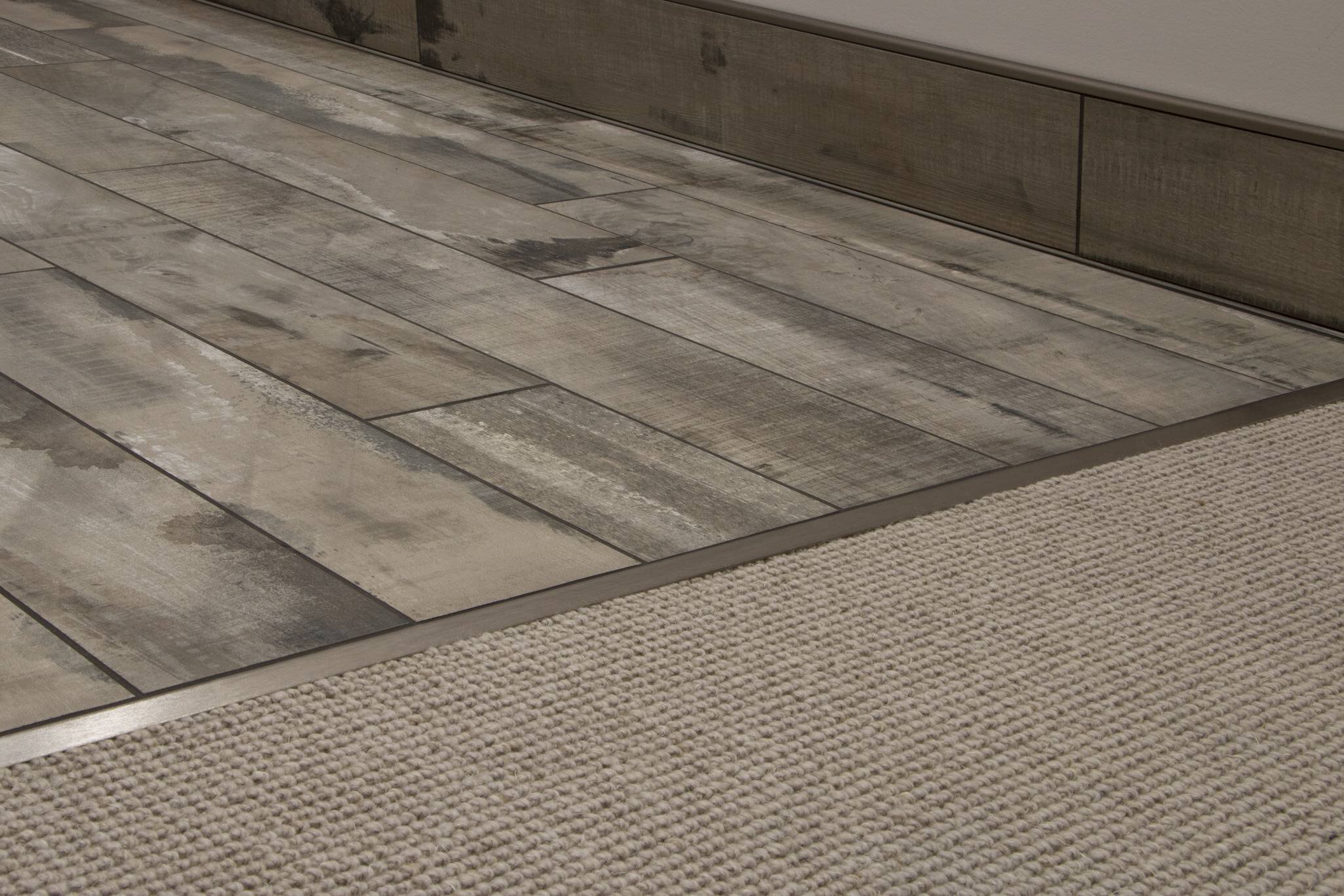
Los perfiles son accesorios de metal o plástico que proporcionan transiciones estéticamente agradables entre diferentes materiales del mismo grosor o de grosores variables, como baldosas de cerámica que hacen una transición a otra baldosa de cerámica, o a superficies de piedra natural, alfombra, laminado, baldosas porcelánicas y paneles de baldosas, pisos de madera o baldosas vinílicas de lujo (LVT). Los perfiles están disponibles en una amplia gama de tamaños, formas y acabados en beneficio de las necesidades del diseñador y del instalador, para agregar un elemento de diseño audaz o sutil, garantizando al mismo tiempo la integridad de la instalación de baldosas cerámicas.
Perfiles para pisos
Existe una amplia variedad de perfiles para pisos en una gama de colores, tamaños, formas, materiales y acabados que complementan cualquier elección de diseño, como estos perfiles de tono dorado agregados como elemento decorativo a la instalación de baldosas del piso.
Los perfiles también se utilizan para crear elegantes transiciones entre recubrimientos de pisos a la misma altura, así como para transiciones en pendiente hacia recubrimientos de pisos a menor altura. Estos perfiles protegen los cantos de las baldosas y crean una transición suave entre las superficies.
Perfiles para paredes
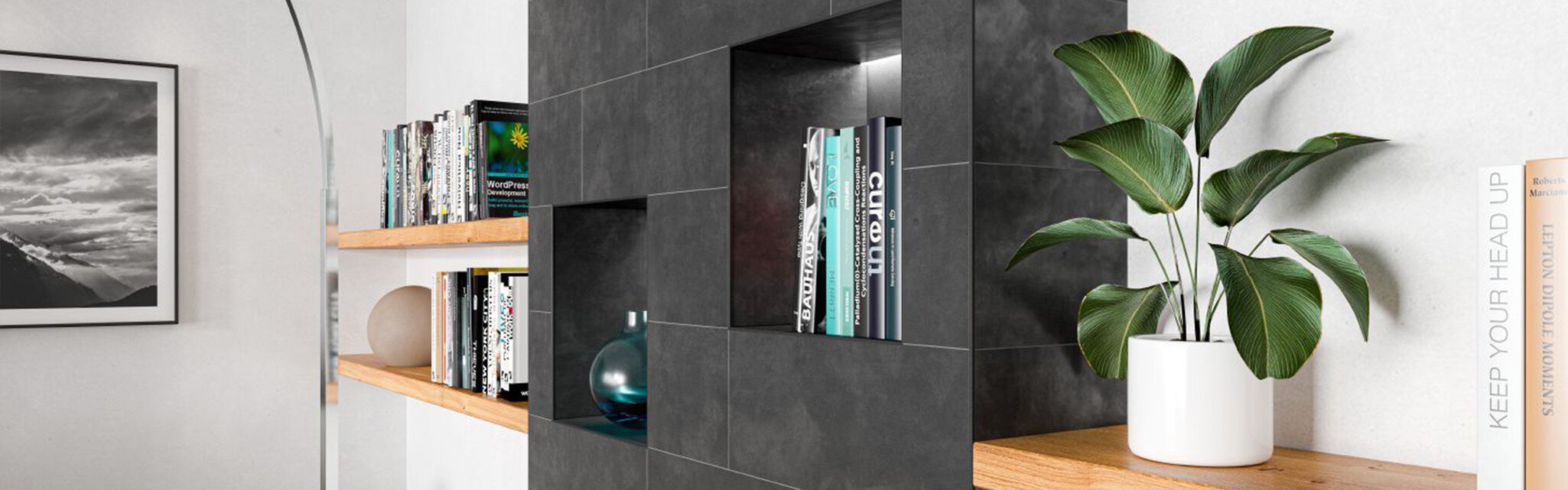
Ya sea para enmarcar el protector contra salpicaduras de una cocina o para crear una pared de acento única, los perfiles ofrecen una protección superior de los cantos de las baldosas y un elegante toque final. Disponibles con diferentes accesorios (como tapones de extremo y ángulos para dar el acabado a dichas transiciones) y en una gran variedad de colores, formas, tamaños y materiales, los perfiles de pared permiten personalizar por completo cualquier pared recubierta con baldosas.
Perfiles para encimeras
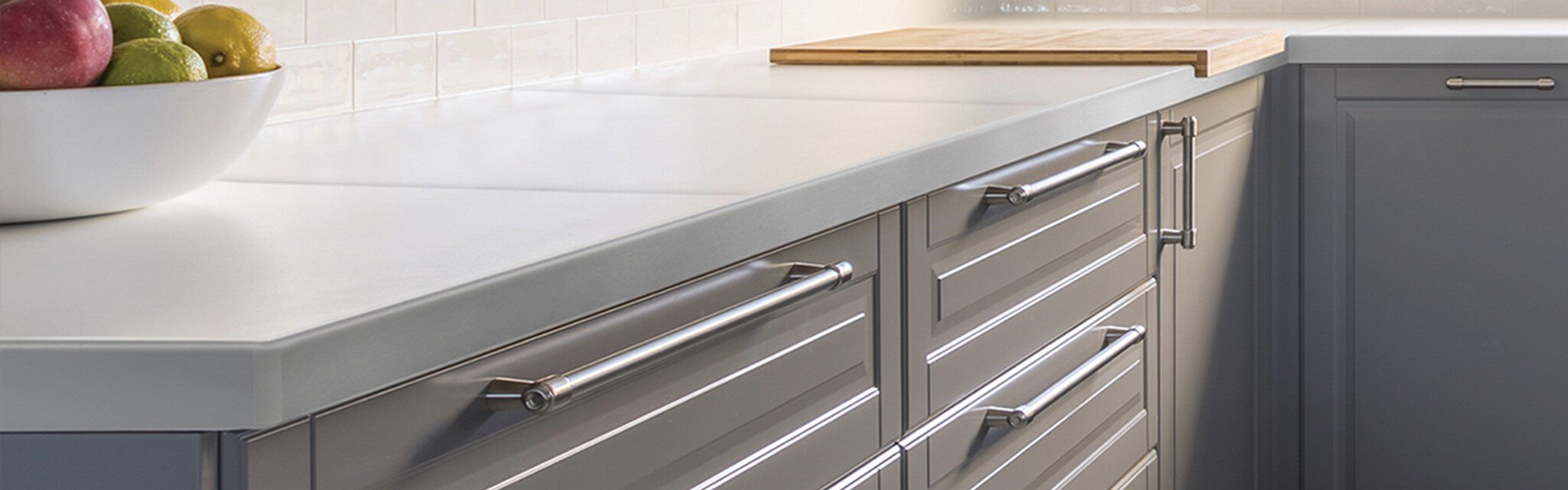
La versatilidad de los perfiles permite enmarcar una encimera en su totalidad o acentuar un área en particular. El uso de perfiles alrededor del lavabo elimina la necesidad de calafatear y agrega un toque de acabado superior cuando se trabaja con baldosas cerámicas.
Perfiles para escaleras
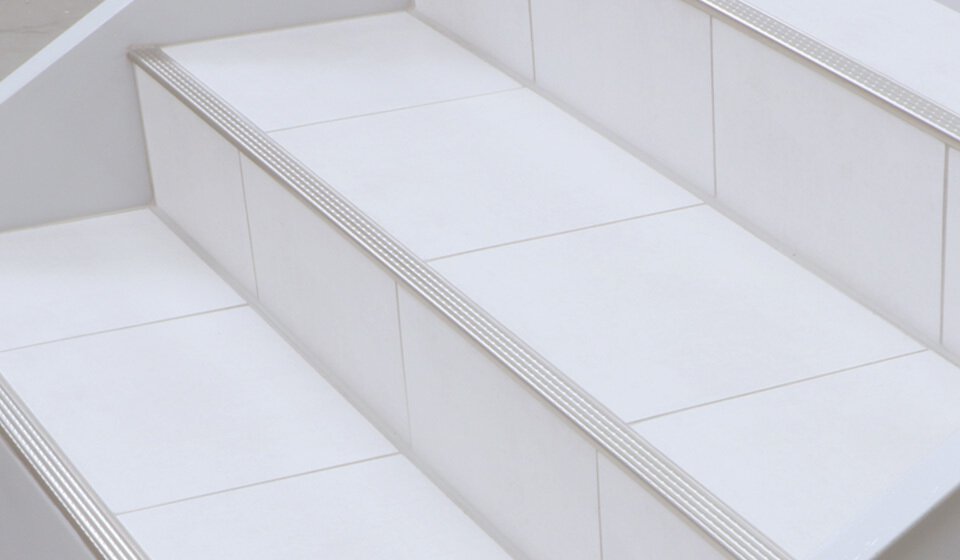
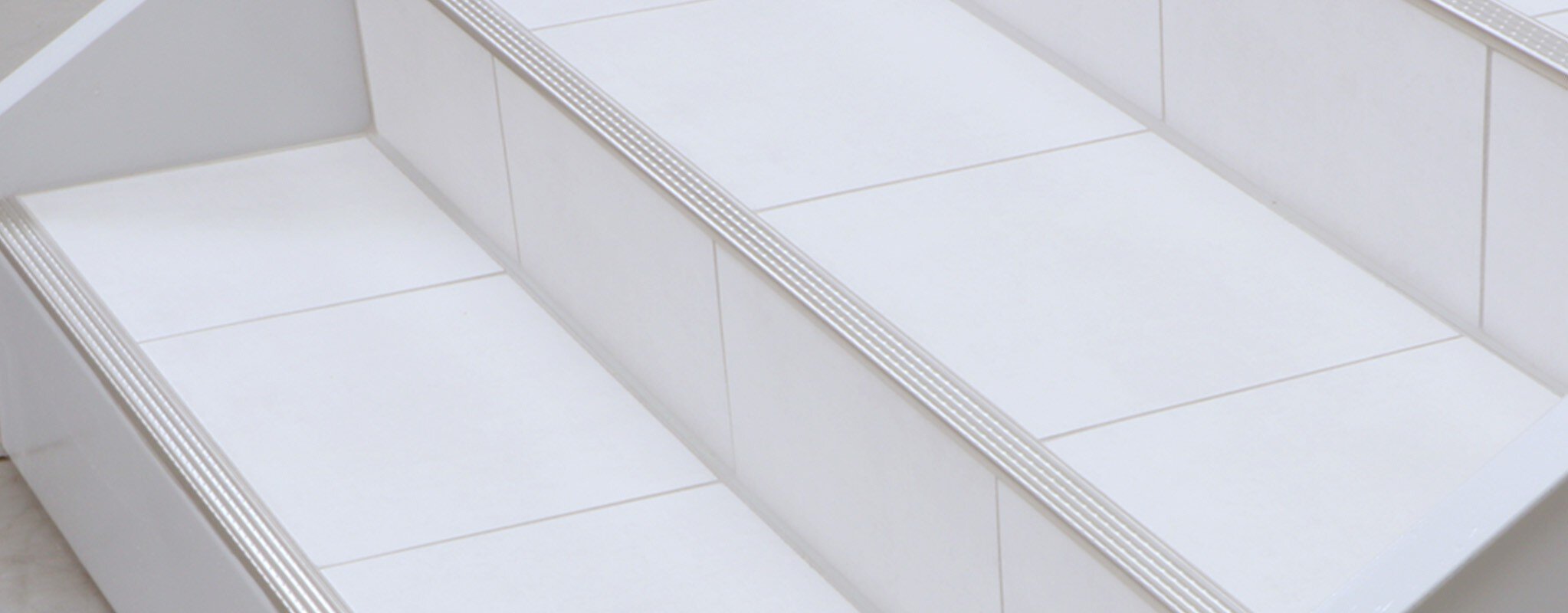
Los perfiles de peldaños protegen los cantos de las baldosas, disimulan el ensamblado de la escalera y permiten mayor visibilidad. Entre las opciones de perfil se incluye la posibilidad de instalar un peldaño antideslizante y aportar un toque decorativo a las aplicaciones de escaleras tanto comerciales como residenciales.
Usos apropiados de los perfiles
Perfiles de juntas de movimiento
Además de permitir las transiciones, algunos perfiles incluyen juntas de movimiento aplicables en los perímetros o dentro de la superficie recubierta con baldosas. Algunos perfiles de juntas de movimiento incluyen, en su centro, bandas compuestas de polietileno clorado (CPE) flexible que se expanden y contraen en función de la temperatura, la humedad y otros factores que pueden contribuir al movimiento. La acomodación al movimiento es necesaria en todas las aplicaciones de baldosas de piso, ya que evita que los materiales se fisuren y desprendan (curvándose y elevándose) debido al movimiento.
El uso de juntas de movimiento es una norma que se exige con la instalación de baldosas (detalle EJ-171 en el Manual TCNA para la instalación de baldosas de cerámica, vidrio y piedra). Para las zonas sujetas a condiciones de congelación/descongelación que son más propensas a la expansión y contracción debido a las fluctuaciones de temperatura, las juntas de movimiento acomodan el movimiento protegiendo el recubrimiento de baldosas o piedra natural. Sin juntas de movimiento, con el tiempo, el recubrimiento puede resultar dañado. Se recomienda instalar los perfiles de las juntas de movimiento como máximo cada 20 ft (6 m) en cada dirección, en función del tamaño de la superficie recubierta con baldosas. El detalle EJ-171 explica cuándo pueden ser necesarias juntas de movimiento más frecuentes, como en zonas expuestas a la plena luz solar. Esta descarga gratis proporciona más información sobre las juntas de movimiento, al igual que el Manual de la TCNA.
Perfiles para ángulos
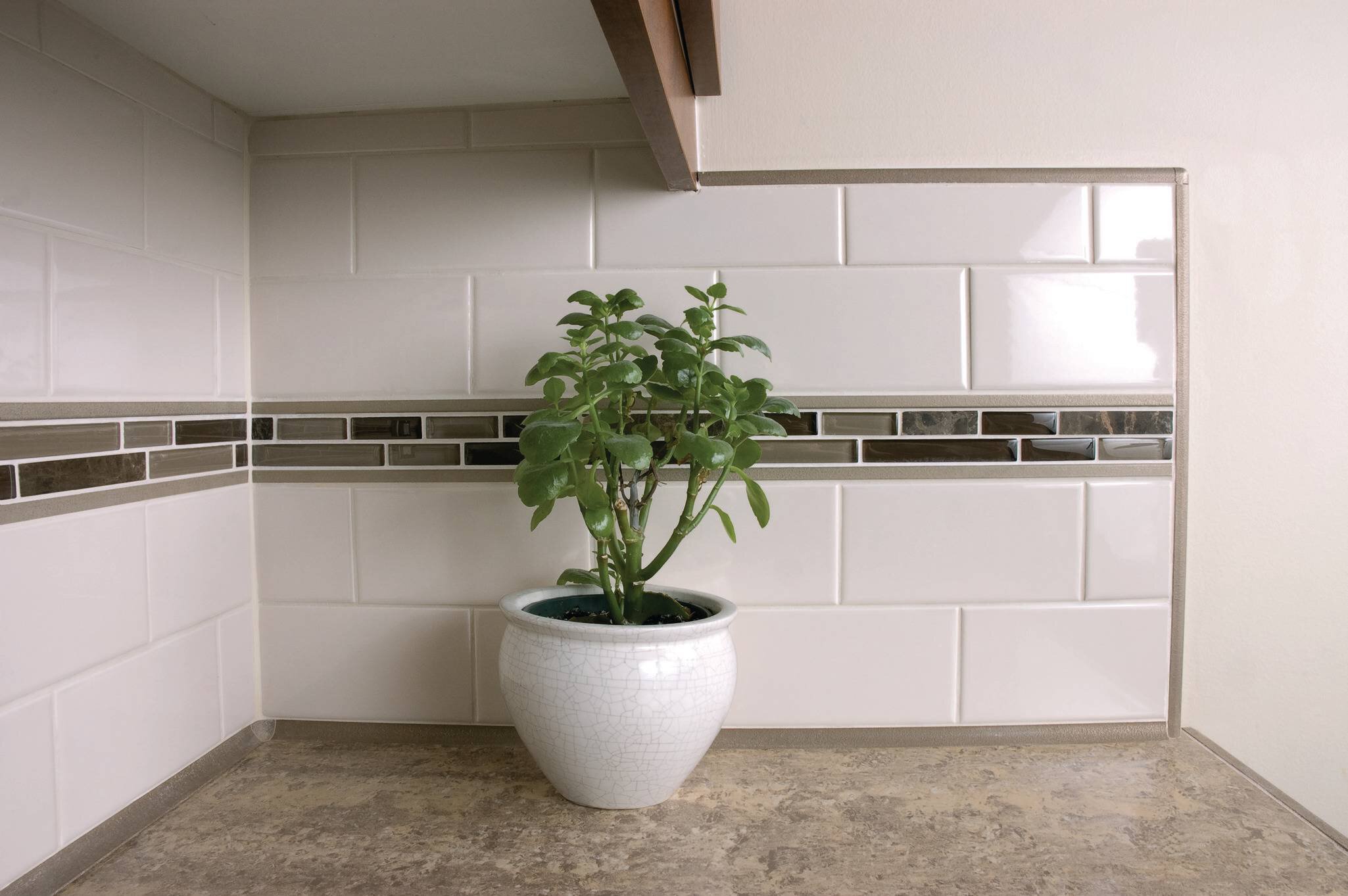
Los perfiles de ángulo, o de escocia, se utilizan habitualmente en las transacciones de pared a piso o de pared a pared como un método práctico para crear una superficie curva que evite la acumulación de suciedad en las esquinas de las instalaciones.
Tradicionalmente, se ha empleado un sellante o masilla para tratar estas zonas debido a la falta de disponibilidad de piezas de perfil cerámico, lo que significa que estas juntas deben mantenerse durante toda la vida útil de la instalación. Para conseguir una instalación con ángulos idóneos y que no requieren mantenimiento, los perfiles de escocia son una opción atractiva que elimina la necesidad de calafatear.
Ambientes interiores secos
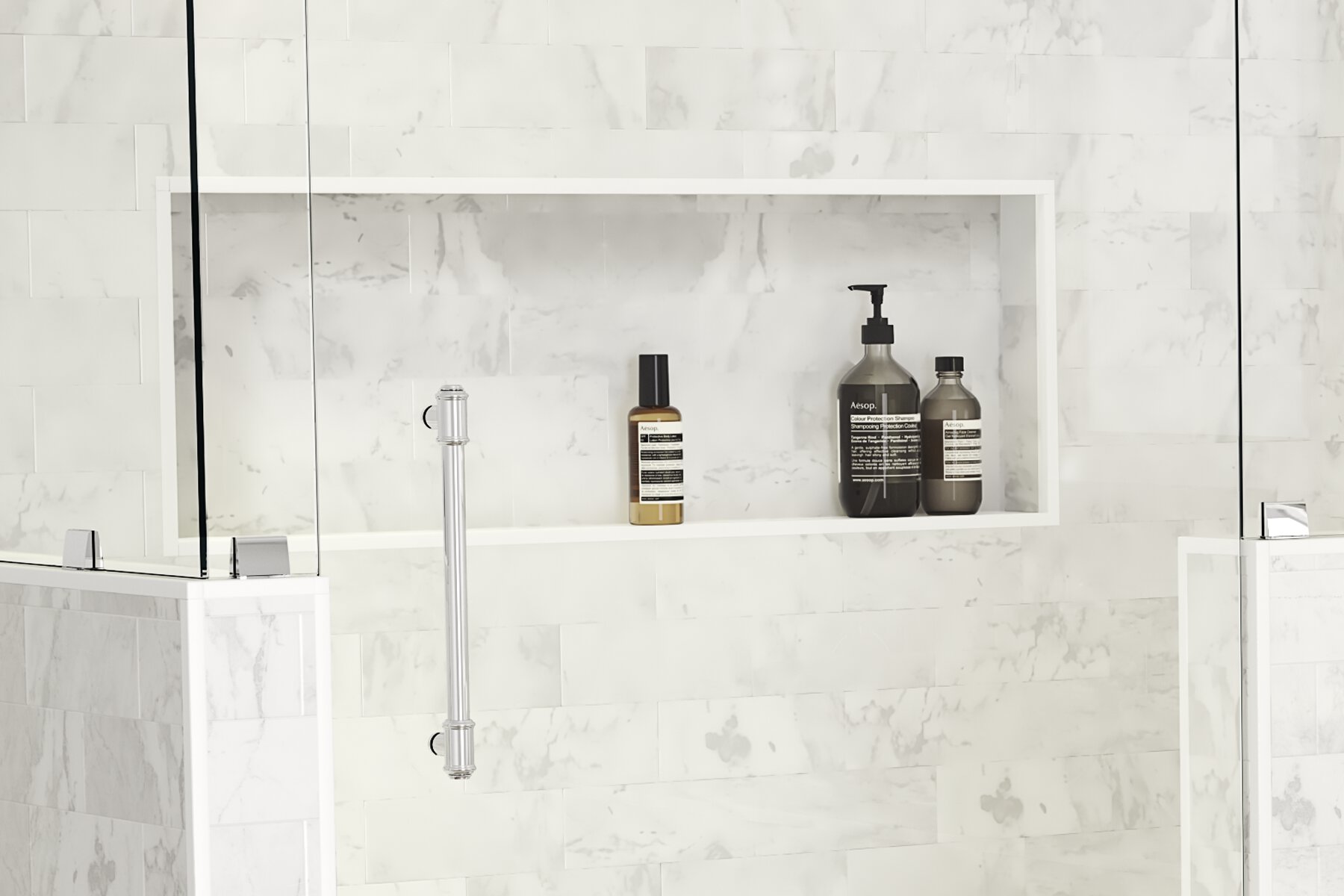
Debido a que la humedad afecta la superficie de algunos revestimientos o acabados de perfiles, el acero inoxidable es la opción recomendada para zonas interiores expuestas a la humedad, como baños, salas de vapor y saunas. El acero inoxidable es también el acabado recomendado para zonas comerciales sometidas a productos químicos y ácidos, tales como en la industria alimentaria, cocinas de restaurantes y hospitales. Aunque muchos acabados de perfiles están aprobados para el uso en ambientes interiores húmedos, la limpieza periódica sigue siendo necesaria.
Ambientes exteriores
La ubicación de la instalación debe tenerse en cuenta a la hora de elegir el acabado específico del perfil, ya que los climas rigurosos, como las zonas sujetas a condiciones de congelación/descongelación, afectarán al acabado. El acero inoxidable, el aluminio lacado y el aluminio lacado y texturizado, son algunos de los acabados apropiados para aplicaciones exteriores
Piscinas
Las piscinas son zonas exteriores muy populares en las que el uso de perfiles representa una ventaja para los instaladores. El acero inoxidable, por ejemplo, proporciona unas vistas impactantes desde la superficie de la piscina, por no hablar de la seguridad al momento de ingresar caminando a la piscina. Aunque algunos de los perfiles utilizados en las piscinas permanecerán sumergidos, con un mantenimiento regular se puede conservar su aspecto y calidad.
Mantenimiento y limpieza
Para conservar el aspecto de los perfiles, es imprescindible un mantenimiento regular. Los productos de limpieza utilizados para limpiar los perfiles, independientemente del acabado y de su ubicación, deben tener un pH neutro para evitar dañar el acabado y/o el recubrimiento. El pH (poder del hidrógeno) se mide en una escala de 1 a 14, en la que 7 es pH neutro. Un pH inferior a 7 es ácido (por ejemplo, el vinagre blanco destilado), y un pH superior a 7 es alcalino (por ejemplo, el amoníaco doméstico). Además de tener un pH neutro (cercano a 7), los limpiadores y materiales de limpieza utilizados para los perfiles no deben ser abrasivos para evitar que se rayen. Consulte la ficha de datos de seguridad del fabricante del limpiador para conocer el pH específico de los productos de limpieza y saber cuáles utilizar, cuáles evitar y cómo limpiar los perfiles para conseguir una instalación duradera.
Transiciones suaves y estilo definido
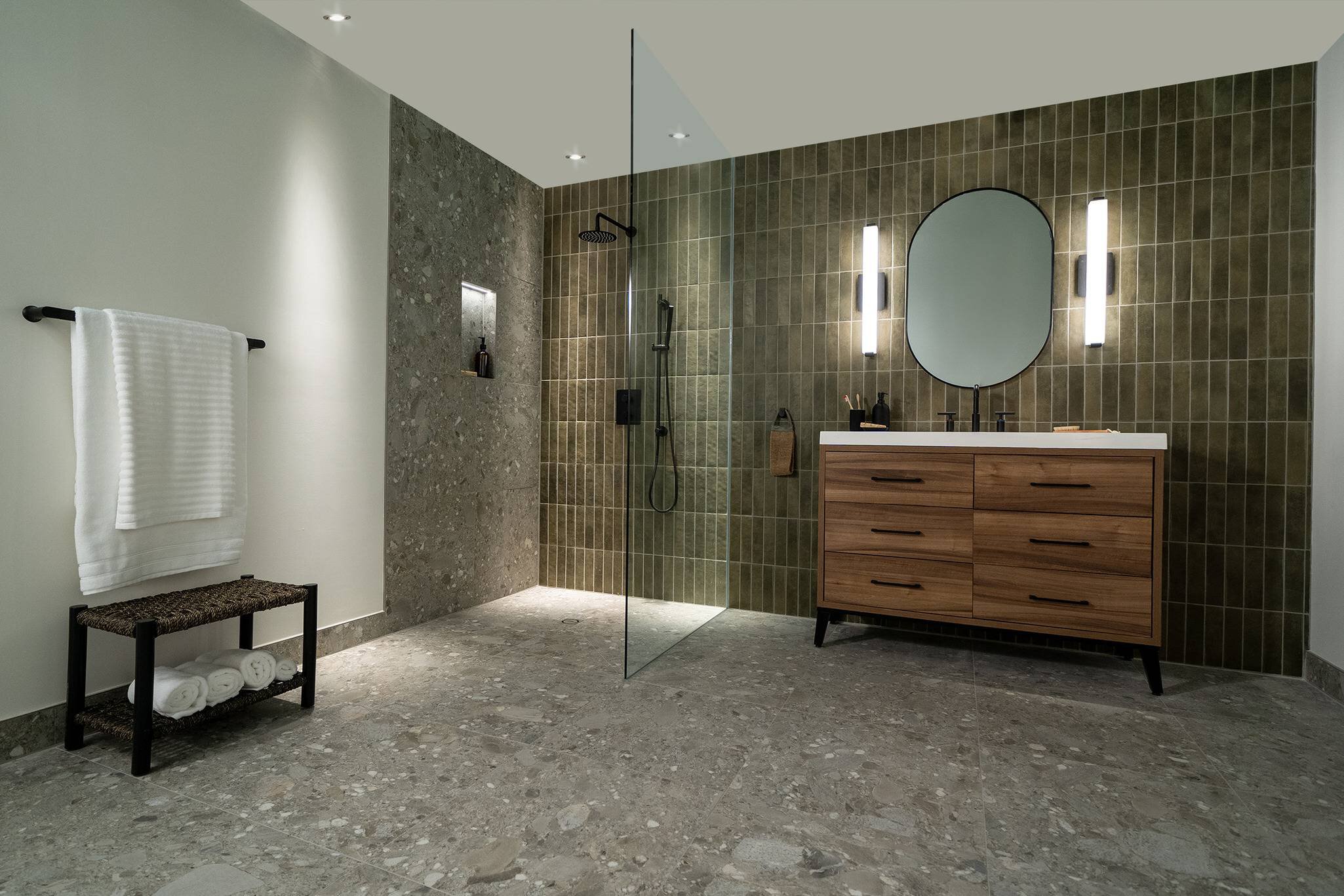
Los diseñadores e instaladores de baldosas cerámicas disponen ahora de una amplia gama de perfiles entre los cuales elegir para terminar una instalación de baldosas y acomodar el movimiento. Al elegir el material correcto para su entorno de instalación, el diseñador y el instalador pueden garantizar muchos años de servicio impecable. Además, los fabricantes ofrecen con frecuencia otros elementos, como rejillas y repisas, que combinan con el estilo del perfil y brindan armonía a toda la instalación.